• Customer Login
  • Employee Login
Greenwood Industries
  • Services
    • New Construction
    • Re-Roofs
    • Commercial Roof Maintenance
    • Commercial Roof Repair
    • Architectural Metal
    • Historic Restoration & Masonry Repair
    • Waterproofing
    • Greenwood Performance Advantage™
    • RoofWatch
    • ErectaStep
    • Safety Audit
    • Drone Inspections
    • Emergency Services
  • Maintenance
    • Maintenance & Repairs Packages
    • Roof Restoration & Warranty
    • Campus Care
  • Safety
  • Projects
  • Roof Systems
    • Commercial
    • Metal
    • Green
    • Solar
  • Blog
  • About
    • Insurance/Bonding
    • Registrations & Licenses
    • News
    • Who We Are
    • Leadership Team
    • Mission & Values
  • Careers
  • Contact
    • Locations
  • Menu Menu

Practical Insights for Long-Term Building Performance

April 17, 2026

Ethan Mania

How Roof Maintenance Decisions Impact Long Term Performance and Cost

How a roof is maintained over time ultimately determines how it performs and how long it lasts. Whether a roof reaches or exceeds its projected service life often depends less on installation and more on the maintenance decisions made over time.

As Greenwood Industries’ Account Manager Ethan Mania explains, “Roof systems are a long-term capital asset designed to perform for decades, but only when informed by timely maintenance decisions.”

Based on experience across commercial facilities, roof systems rarely fail suddenly. Instead, they deteriorate progressively, with small issues expanding when maintenance is delayed or deferred.

“The difference between a roof reaching its projected lifetime or failing prematurely comes down to the maintenance you put into it,” Ethan says.

At Greenwood Industries, our Account Managers serve as building envelope advisors, helping clients understand risk, plan maintenance, and protect their facilities long term. Ethan works with facility managers and property owners throughout the Northeast, helping them evaluate roofing conditions and plan maintenance strategies. Here, he breaks down how maintenance decisions directly impact long-term performance, service life, and total cost of ownership.

The Maintenance Decision That Most Often Leads to Premature Failure of a Roof System

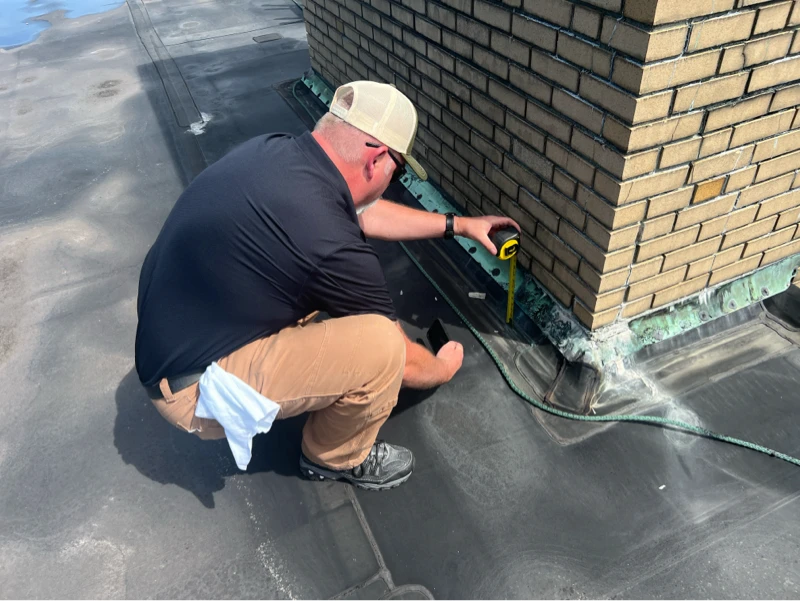
One of the most damaging maintenance decisions is delaying repairs to minor infiltration or flashing deficiencies. Small breaches at penetrations, seams, terminations, or wall transitions are often viewed as minor concerns, but they rarely remain isolated.

“The single most damaging decision we see is delaying minor infiltration or flashing repairs,” Ethan explains. “Small breaches rarely stay small without proper maintenance.”

Once moisture enters a roof assembly, damage begins to spread. Insulation loses thermal performance, decking can deteriorate, membranes break down more rapidly, and structural components may begin to corrode.

“Water intrusion is progressive,” he notes. “Once moisture enters the system, it compromises insulation, deteriorates the deck, accelerates membrane breakdown, and can corrode structural components.”

By the time an interior leak becomes visible, moisture has often already expanded well beyond the original entry point.

“When a leak becomes visible, the damage has already expanded significantly within the roof assembly,” Ethan adds.

What begins as a minor flashing repair can escalate into widespread system damage if corrective action is delayed.

 Proactive Roof Maintenance vs Reactive Repairs

From a service perspective, proactive maintenance fundamentally changes how roof systems are managed. Reactive repairs typically address symptoms after damage has progressed, such as interior leaks, wet insulation, or membrane failures. 

“Reactive repairs address symptoms after damage has already progressed,” Ethan says. “They’re more invasive, more expensive, and more disruptive to operations.”

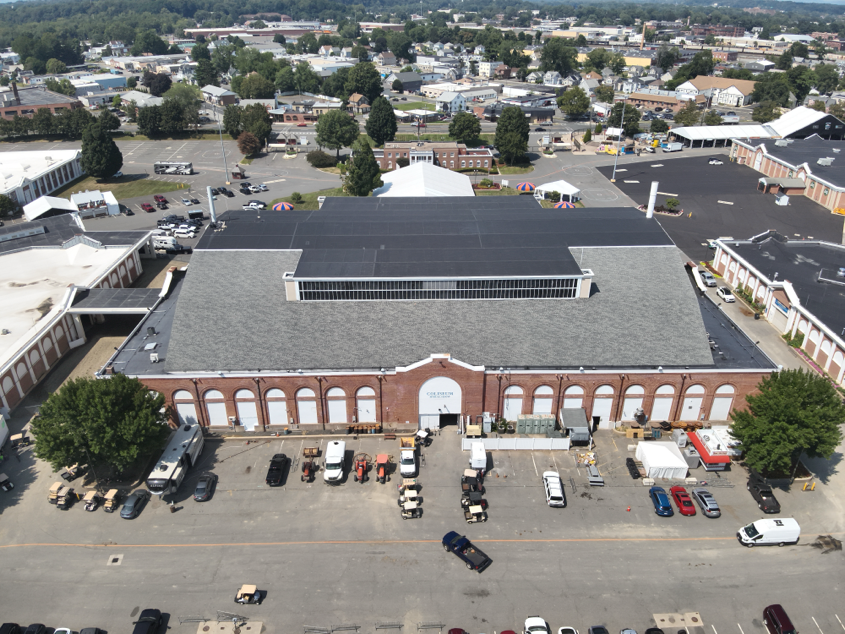
Roof Top View

A proactive maintenance approach focuses on:

  • Identifying vulnerabilities before failure occurs 
  • Preserving manufacturer warranty compliance 
  • Extending service life beyond original projections 
  • Reducing emergency service calls and operational disruption 
  • Allowing predictable budgeting rather than unplanned capital expenses 

“It shifts roof management from crisis response to asset protection,” Ethan explains.

From a lifecycle cost standpoint, structured preventative maintenance programs consistently cost a fraction of premature roof replacement.

“Extending a roof system even a few years can create significant deferred capital savings and improve return on the original investment,” Ethan adds.


Early Warning Signs Facility Managers Should Watch For

Facility managers should monitor both exterior and interior indicators of early roof system stress. Common warning signs include:

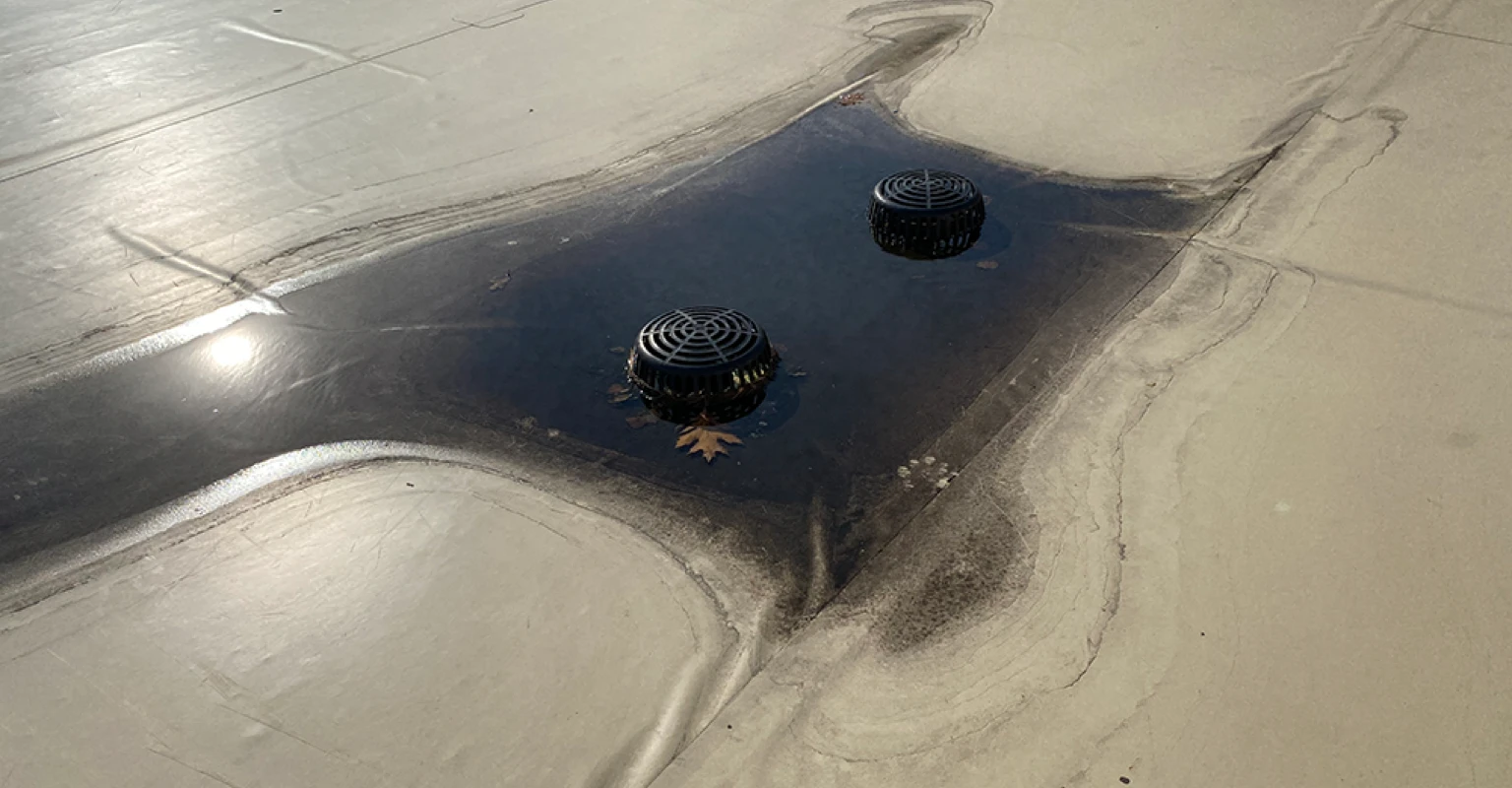
  • Ponding water remaining more than 48 hours after rainfall 
  • Open seams, failed flashing, or deteriorated sealants 
  • Membrane blistering, shrinkage, or surface cracking 
  • Clogged or damaged drainage systems 
  • Rusting metal components or fasteners backing out 
  • Interior ceiling stains or recurring leaks in the same area 
  • Increasing frequency of minor service calls 

“These indicators rarely resolve on their own,” Ethan emphasizes. “Routine inspections allow targeted, lower-cost corrective measures before insulation saturation, deck deterioration, or structural impact occurs.”

Roof Maintenance Determines the Outcome

Long-term roof performance is defined by how deterioration is managed over time.

“Maintenance decisions determine whether deterioration is slow and controlled or accelerated and costly,” Ethan reinforces.

Consistent inspections and timely corrective work allow roofs to perform as intended while protecting long term building value.

If you are evaluating your roof system or planning ahead for maintenance, connect with Greenwood Industries to speak with one of our account managers and discuss a proactive approach to long-term performance.

https://greenwoodindustries.com/wp-content/uploads/2025/06/greenwood-logo.webp 0 0 HM WP https://greenwoodindustries.com/wp-content/uploads/2025/06/greenwood-logo.webp HM WP2026-04-17 11:08:142026-04-17 11:13:12Practical Insights for Long-Term Building Performance

Designing for climate resilience: preparing roof systems for heat, storms and extremes

April 17, 2026

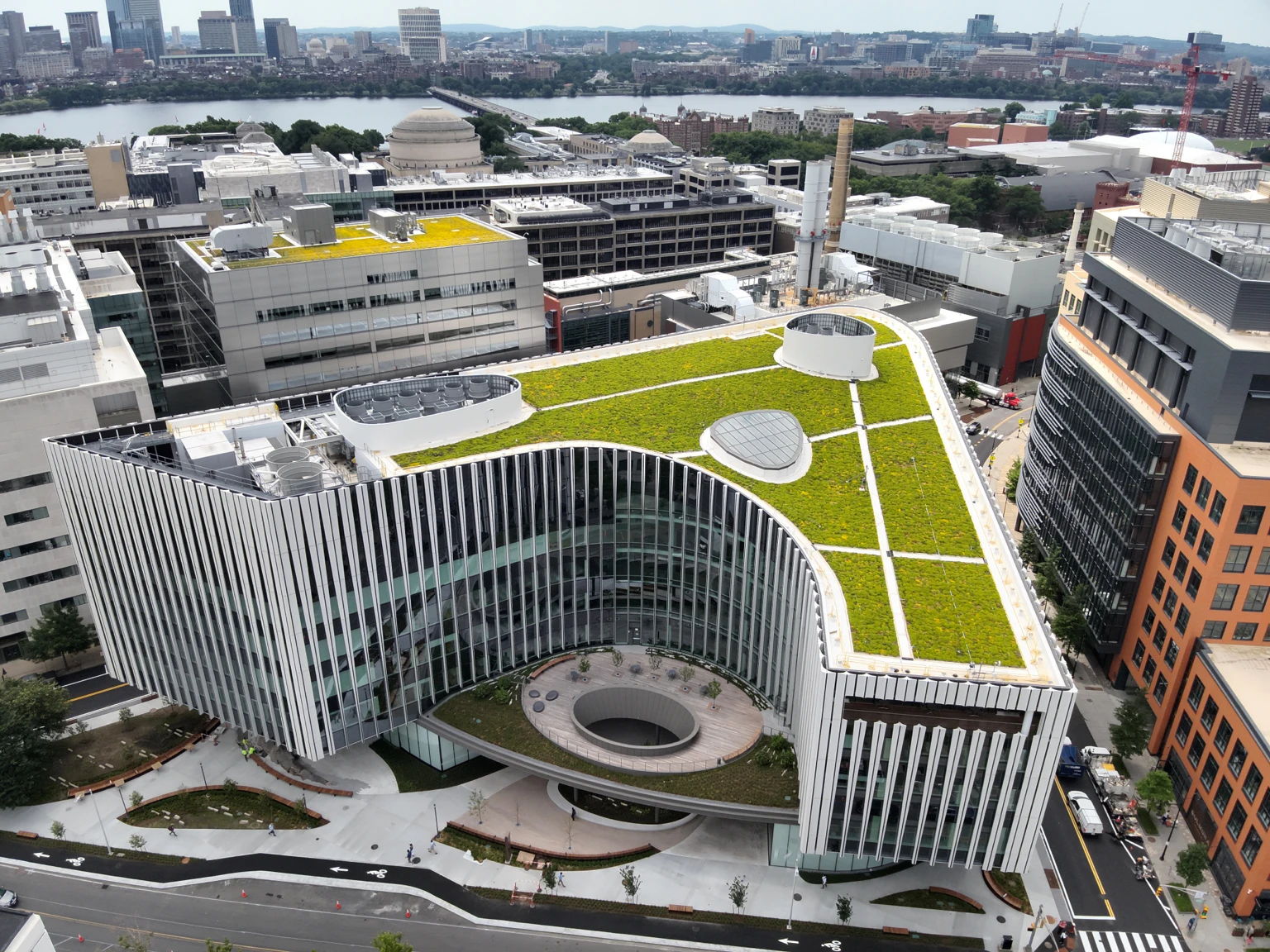
Ragon view from above

Why resilient roofing is becoming a design requirement

Extreme weather is no longer an occasional stressor for buildings in the Northeast. It is a consistent condition that directly impacts roof performance.

According to the National Oceanic and Atmospheric Administration, the region has experienced a more than 70% increase in the amount of precipitation falling during the heaviest events since the mid-20th century, the largest increase of any region in the United States.

In Boston, annual precipitation has increased by approximately 6 to 8 inches over the past century, with a greater share coming from high-intensity storms. New York City has also seen a rise in extreme rainfall events, contributing to more frequent drainage overload and localized flooding.

At the same time, data from the Intergovernmental Panel on Climate Change shows that heat waves are occurring more frequently and lasting longer, increasing thermal stress on roofing materials and accelerating system wear.

These conditions directly affect how roof systems perform. In many cases, assemblies are exposed to more water, more heat, and more stress than they were originally designed to manage.

For commercial buildings, the roof is the first line of defense. Roof systems are now expected to manage more water, more heat, and more frequent storm events than most were originally designed for.

How climate stress impacts roof systems

Roof systems are exposed to a combination of stressors that are becoming more pronounced:

  • Heat accelerates membrane aging, expansion, and material fatigue 
  • Heavy rainfall increases the risk of ponding and water intrusion 
  • Wind and storm events place additional stress on attachments, edges, and flashing 
  • Freeze-thaw cycles continue to impact assemblies in colder climates 

These conditions rarely act independently. In many cases, they compound, placing additional strain on materials and detailing.

Without proper design and maintenance, even well-installed systems can begin to break down under repeated exposure.

Selecting the right roof system for performance & extreme weather

Different roof systems respond differently to environmental stress. Selecting the right system plays a key role in long-term resilience.

Based on systems used across the industry and outlined by Greenwood Industries:

  • EPDM roofing systems
    Known for flexibility and durability, EPDM performs well under temperature fluctuations and UV exposure, making it a strong option for long-term performance in variable climates. 
  • TPO and PVC systems
    These reflective membranes help reduce heat absorption, improving energy efficiency and reducing thermal stress on the building. They are often used where heat mitigation is a priority. 
  • Built-up roofing (BUR) and modified bitumen
    Multi-layer systems provide redundancy and durability, particularly in high-traffic or high-exposure environments. 
  • Metal roofing systems
    Highly durable and resistant to weather exposure, metal systems perform well in high-wind conditions and can be designed for long service life with proper detailing. 
  • Vegetative (green) roof systems

Layered assemblies that incorporate waterproofing, drainage, and vegetation, green roofs help manage stormwater and reduce roof surface temperatures, supporting both system protection and environmental performance.

  • Solar (photovoltaic) roof systems

Solar systems integrate energy generation with roofing assemblies, requiring coordinated design to maintain waterproofing integrity while potentially reducing surface temperatures through panel shading.

Each roofing system has advantages, but performance ultimately depends on how it is designed, installed, and maintained as part of the full building envelope.

The importance of detailing and system integration

Resilience is not determined by membrane selection alone. Failures often occur at transitions and details:

  • Roof-to-wall intersections 
  • Penetrations and mechanical curbs 
  • Drainage and slope conditions 
  • Edge metal and attachment points 

As weather becomes more extreme, these areas are subjected to greater stress. Proper detailing and coordination across trades are critical to ensuring continuity and performance.

Roof maintenance as a resilience strategy

Even the most robust roof systems require ongoing maintenance to perform as intended.

As conditions become more demanding, the role of maintenance becomes more important. Small issues, such as minor membrane damage, clogged drainage, or failing sealants, can escalate quickly under extreme weather conditions.

Through Greenwood Performance Advantage (GPA) Packages, facility teams can take a proactive approach to:

  • Routine inspections 
  • Preventative maintenance 
  • Early identification of vulnerabilities 
  • Prioritized repair planning 

This approach helps extend system life, reduce emergency repairs, and improve overall performance in changing conditions.

Planning ahead for seasonal exposure

Late spring and early summer are key windows for evaluating roof performance.

Winter conditions may have introduced damage, while upcoming summer heat and storm activity will place additional demands on the system. Addressing issues now allows facility teams to:

  • Prepare for peak weather conditions 
  • Avoid mid-season failures 
  • Coordinate repairs before schedules tighten 

Closing thoughts

As summer approaches, roof systems will face increased heat, UV exposure, and the potential for severe storm activity.

Designing for climate resilience is not about predicting specific events. It is about preparing for a wider range of conditions than buildings have historically experienced.
By selecting appropriate roof systems, focusing on critical details, and prioritizing maintenance, facility teams can improve performance, extend service life, and reduce long-term risk.

If your roof system has not been evaluated recently, now is the time to assess how it will perform under the conditions ahead.

For support in planning a new project or establishing a proactive maintenance program, contact the Greenwood Industries team to discuss your building’s needs.

https://greenwoodindustries.com/wp-content/uploads/2025/06/greenwood-logo.webp 0 0 HM WP https://greenwoodindustries.com/wp-content/uploads/2025/06/greenwood-logo.webp HM WP2026-04-17 11:01:132026-04-17 11:05:49Designing for climate resilience: preparing roof systems for heat, storms and extremes

Staying Aligned with Building Code Regulations: What the OSHA Ladder Rule Means for Your Facility

March 26, 2026

Why OSHA Ladder Regulations Are Changing

Building code compliance is constantly evolving as safety, materials, and construction practices improve. A recent update affecting commercial and industrial facilities is OSHA’s walking-working surfaces rule, which changes how fixed ladders over 24 feet must be designed and maintained.

For years, ladder cages were considered standard protection. Now, that approach is being phased out in favor of ladder safety systems and personal fall arrest systems, which provide more reliable protection in the event of a fall.

For facility managers, this is more than a regulatory update. It directly impacts how buildings are accessed, maintained, and upgraded over time.

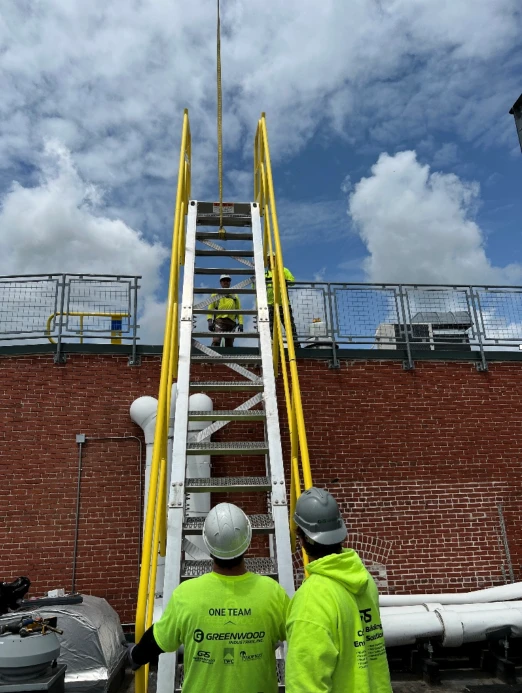
OSHA Ladder SafetyWhat are the OSHA Ladder Rule Requirements? 
Under OSHA’s updated ladder safety standards, which reflect recent regulatory changes:

  • Fixed ladders over 24 feet must be equipped with a ladder safety system or personal fall arrest system 
  • Ladder cages are no longer considered compliant fall protection for new ladders installed after November 19, 2018 
  • Existing ladders with cages must be upgraded by November 18, 2036 

There is an important detail that often gets overlooked. If any portion of an existing ladder is replaced, that section must meet current code requirements.

This means compliance is not just tied to a future deadline. It can be triggered during routine repairs, renovations, or adjacent work such as roofing or façade projects.

How This Impacts Existing Buildings

Many facilities still rely on ladder systems installed years or decades ago. While these systems may appear functional, they may not meet current standards.

A common scenario involves a ladder with a cage that was compliant when installed. Over time, sections may need repair due to wear, corrosion, or changes to surrounding systems. Once those repairs begin, updated requirements can apply.

What starts as a maintenance item can quickly become a larger upgrade.

Without proper planning, this can lead to:

  • Project delays due to code compliance issues 
  • Unexpected scope increases 
  • Safety risks if systems are not properly evaluated 

Understanding when and how these requirements apply is critical to avoiding disruption.

Coordinating Compliance with Building Envelope Work

Ladder systems are rarely isolated from other building components. They are often tied directly to roof access, mechanical equipment, and façade maintenance.

For this reason, ladder compliance is best evaluated as part of a broader building envelope strategy.

At Greenwood Industries, this means looking at:

  • How access systems integrate with roofing assemblies 
  • Whether planned repairs or replacements will trigger compliance updates 
  • How to coordinate fall protection systems with existing conditions 
  • The sequencing of work across trades to avoid conflicts or rework 

This approach allows facility teams to address compliance proactively, rather than reacting to it mid-project.

When to Evaluate Your Ladder Systems

If you are responsible for building maintenance or capital planning, it may be time to take a closer look at your ladder systems if:

  • Fixed ladders exceed 24 feet in height 
  • Existing systems rely on cages for fall protection 
  • Repairs or modifications are being planned 
  • Roofing, façade, or mechanical work is scheduled 
  • Access or safety concerns have been raised by staff or contractors 

In many cases, these conditions indicate that a more detailed evaluation is needed to determine current compliance requirements.

Planning Ahead for Ladder Rule Compliance

OSHA’s ladder rule reflects a broader shift toward safety systems that are not only compliant, but effective in real-world conditions.

For facility teams, staying aligned with these changes requires forward planning. Addressing ladder systems as part of larger projects, rather than in isolation, can help reduce costs, improve safety, and avoid last-minute scope changes.

By understanding how regulatory updates apply to your building and coordinating them with ongoing work, you can maintain compliance while supporting long-term performance across the entire building envelope.

Need help navigating OSHA compliance updates? Our team can evaluate your facility and recommend the right path forward. Reach out today. 

https://greenwoodindustries.com/wp-content/uploads/2025/06/greenwood-logo.webp 0 0 HM WP https://greenwoodindustries.com/wp-content/uploads/2025/06/greenwood-logo.webp HM WP2026-03-26 12:00:042026-03-26 12:05:45Staying Aligned with Building Code Regulations: What the OSHA Ladder Rule Means for Your Facility

4 Signs It’s Time for a Full Roof Inspection

March 9, 2026

When’s the best time for a full roof inspection? Before you need one.

Preventative maintenance remains the best practice for protecting a facility and extending the life of a roof system. But in reality, many facility managers are not starting with a new building or a roof in ideal condition. Most are managing systems that have aged over time, experienced repairs, or carry deferred maintenance, making it difficult to begin from a preventative maintenance baseline.

From experience, Greenwood Industries’ Account Managers know that full inspections are often scheduled only after an obvious problem appears. The goal is to recognize earlier warning signs, the “yellow flags,” that indicate a roof and building envelope would benefit from a comprehensive evaluation before conditions escalate into emergencies.

As Account Manager Nick Andreozzi explains, “From the customer’s point of view, the risk of waiting always seems small at first. But moisture spreads very easily, and what starts as a minor issue can turn into a much larger structural situation if it’s ignored.”

At Greenwood Industries, our Account Managers serve as building envelope advisors, helping clients understand risk, plan maintenance, and protect their facilities long term. Nick works with facility managers and property owners throughout the Northeast, helping them evaluate roofing conditions, plan maintenance strategies, and prevent costly emergency repairs. Here, Nick outlines several key conditions to look for that may indicate your facility would benefit from a full roof inspection.

4 Signs Inspection Time

When to Schedule a Commercial Roof Inspection

1. Visible Membrane and Attachment Issues

One of the first indicators that a roof needs more than a quick check is visible movement or separation within the roofing system. Delamination, loose membrane edges, or areas where the scrim becomes visible can signal improper attachment or aging materials.

“When you’re walking a commercial roof and you can actually see the scrim, or the EPDM membrane looks loose or lifting, that’s a red flag,” Nick says. “It usually means the membrane wasn’t properly adhered, seamed, or mechanically attached during installation.”

When membranes are not properly secured, wind and weather can worsen the condition quickly. What begins as a localized issue can expand into larger areas of failure, increasing the likelihood of leaks and system damage. A full inspection allows professionals to evaluate attachment integrity and identify areas where repairs can stabilize the system before further deterioration occurs.

2. Ponding Water and Drainage Concerns

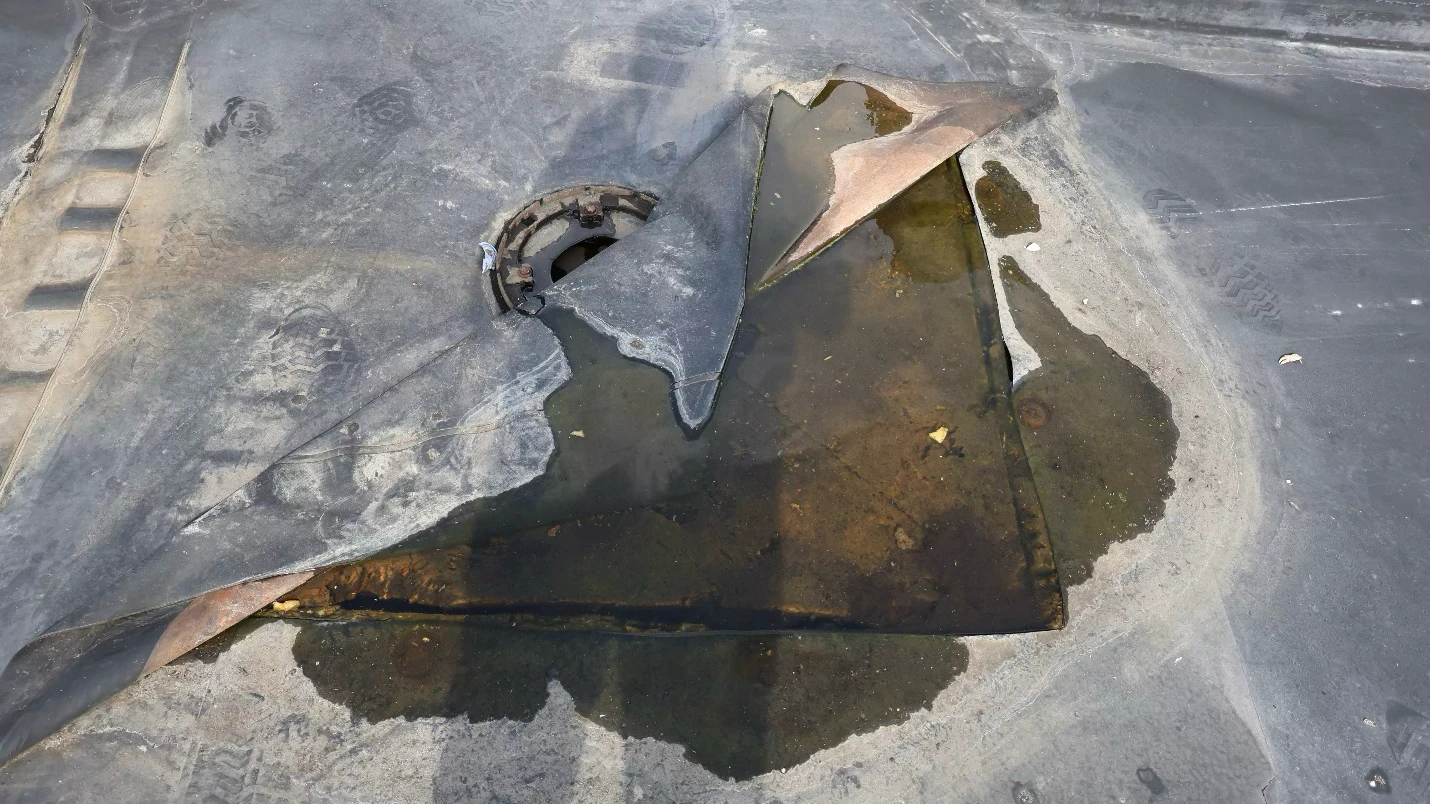
Standing water is one of the most consistent warning signs seen during inspections. Ponding water often indicates drainage problems, structural deflection, or saturated insulation beneath the membrane.

“From a contractor’s standpoint, ponding water is a big one,” Nick notes. “It usually points to a larger issue, whether that’s poor drainage design, saturated insulation, or a leak that hasn’t shown up inside the building yet.”

Over time, trapped moisture accelerates material breakdown and increases the risk of leaks. Addressing drainage and moisture concerns early helps prevent long-term damage and extends the overall life of the roof system.

Roof Leak

3. Flashing Failures and Roof Penetrations

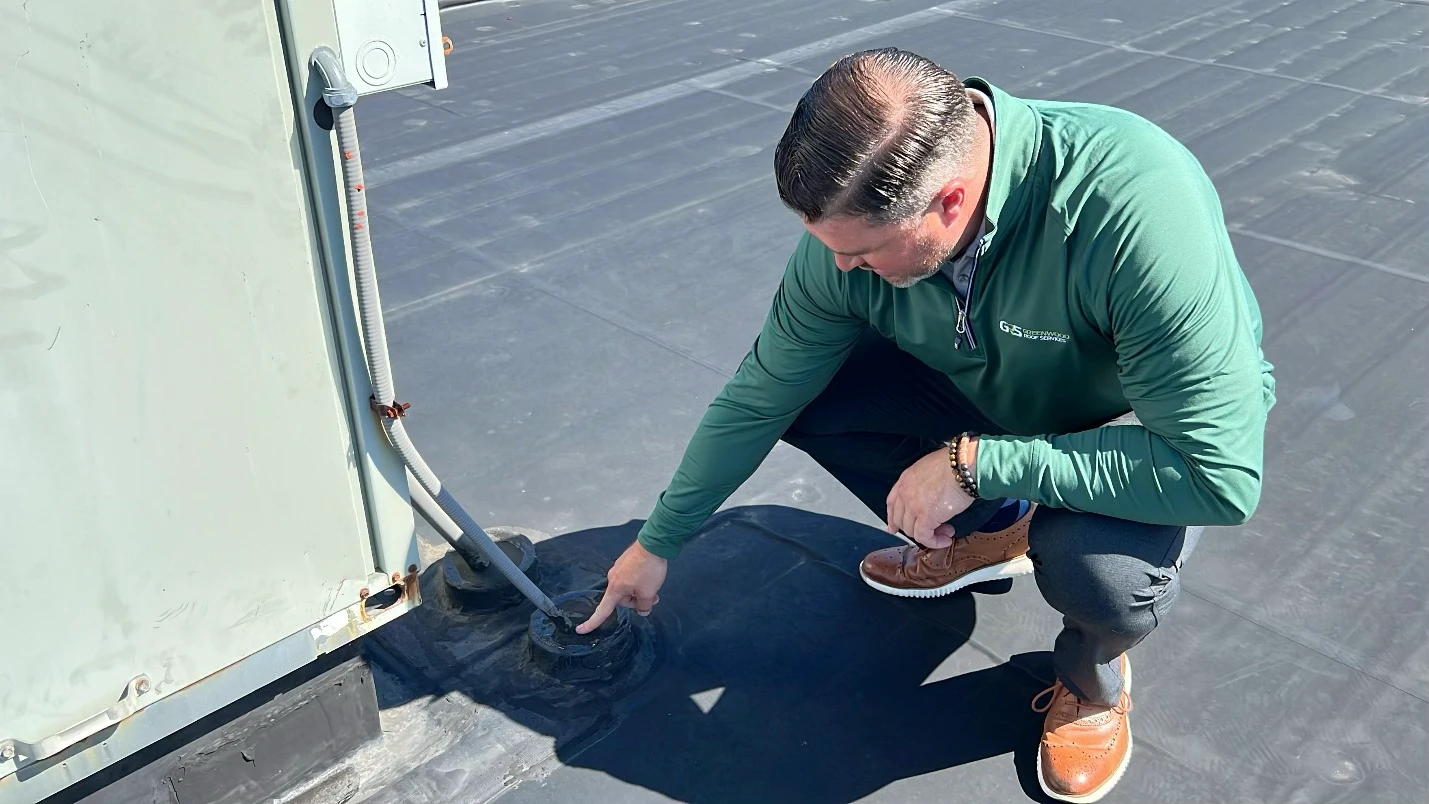
Flashing around pipes, pitch pockets, and rooftop penetrations is another common source of developing problems. Loose pitch pockets, deteriorated sealants, or small tears around penetrations allow water to enter the system gradually.

“If you look at a pipe penetration, it has to be wrapped and sealed correctly,” Nick explains. “A lot of times we see loose pitch pockets, deteriorated sealants, or small tears around penetrations that allow water to enter over time.”

These areas are especially vulnerable because they experience frequent movement and exposure. A comprehensive inspection evaluates both the exterior condition and potential pathways for water intrusion before leaks become active.

4. Interior Warning Signs Often Appear First

While inspections begin on the roof, complaints usually originate inside the building. Stained ceiling tiles, recurring drips, or areas that must be closed due to leaks are often the first signs building occupants notice.

“Active leaks inside the building are usually the number one thing customers notice first,” Nick says. “By the time you’re seeing stains, rotted ceiling tiles, or constant drips, water has already been getting in for a while.”

Moisture follows gravity and can travel far from the original source, making repairs more complex and disruptive if not addressed early. Coordinating exterior inspections with interior observations helps identify root causes rather than treating symptoms.

Roof Repair

When Roof Age Alone Warrants an Inspection

Even without active leaks, roof age is an important factor. Many commercial roofing systems begin moving beyond warranty coverage around the 15 to 20 year mark. At that stage, materials may still appear functional while becoming more vulnerable to failure.

Scheduling inspections as roofs approach this age allows building owners to plan repairs proactively rather than reacting to emergencies that must be funded immediately.

The Risk of Waiting

From a building owner’s perspective, early issues often seem minor. In practice, moisture spreads quickly through insulation and structural components, turning small problems into larger repair scopes over time.

Waiting can lead to operational disruptions, air quality concerns, and in severe cases, the temporary loss of usable building space. Costs also increase as repair areas expand and emergency work becomes necessary.

Most of these situations begin with conditions that were visible and correctable earlier.

Practical Advice from Commercial Roof Experts

“A common mistake we see year after year is delaying known repairs or relying on temporary fixes,” Nick emphasized. “Roofing systems rarely improve on their own, and water intrusion tends to grow quietly before becoming visible.

Consistent inspections and timely repairs help extend the service life of a roof, often by several years, while reducing the likelihood of emergency service calls.”

If you are noticing any of these conditions or want to better understand the current state of your roof system, connect with our team at:
https://greenwoodindustries.com/contact/

https://greenwoodindustries.com/wp-content/uploads/2025/06/greenwood-logo.webp 0 0 HM WP https://greenwoodindustries.com/wp-content/uploads/2025/06/greenwood-logo.webp HM WP2026-03-09 13:49:292026-03-10 09:29:184 Signs It’s Time for a Full Roof Inspection

Greenwood Industries Named Official Waterproofing Company of the New England Patriots and Gillette Stadium

March 6, 2026

WORCESTER, MA (March 9, 2026) — Greenwood Industries is proud to announce its designation as the Official Commercial Roofing Company of the New England Patriots and Gillette Stadium, bringing together two winning organizations that share a relentless commitment to excellence, preparation, and proven results.

Over the past several years, Greenwood has played a key role in major projects at Gillette Stadium, delivering complex roofing solutions at one of the country’s most visible sports venues.

As part of Gillette Stadium’s North End renovation project, completed in 2023 in partnership with Suffolk Construction, Greenwood installed roofing systems on both the North End addition and the stadium’s signature Lighthouse. The project required detailed coordination, technical precision and adherence to an aggressive schedule, all while operating in a live, high-profile sports and entertainment environment.

More recently, Greenwood completed the roofing installation at the new Patriots Training Center, again in collaboration with Suffolk Construction. Opening this spring, the state-of-the-art facility will support year-round team operations and player development and performance with Greenwood’s work ensuring that the building envelope meets the highest commercial standards.

In addition to these large-scale capital projects, Greenwood’s Service Division manages ongoing roofing services at Gillette Stadium, including small roof replacements, preventive maintenance and routine inspections. This work reinforces Greenwood’s commitment to not only build at the highest level, but to also protect and maintain critical facilities over the long term.

“We set the same standard for ourselves as the Patriots do for their organization by preparing thoroughly, executing at the highest level and delivering results that stand up over time,” said David Klein, CEO of Greenwood Industries. “From highly visible renovations to day-to-day service work, our team takes pride in delivering quality, safety and reliability every time we take the field.”

Greenwood Industries is a leading commercial roofing and building envelope contractor throughout the Northeast, serving clients in education, healthcare, corporate, manufacturing and professional sports facilities. This official partnership brings together a world-class franchise and a top-performing contractor, underscoring Greenwood’s ability to perform on the biggest stage while maintaining the responsiveness and service excellence that define the company’s approach.

For more information about Greenwood Industries and its commercial roofing services, visit www.greenwoodindustries.com.

About Greenwood Industries
Greenwood Industries is the Northeast’s leading commercial roofing and custom building envelope provider, with offices in Massachusetts, New York, Connecticut, and Rhode Island. For more than 30 years, Greenwood has delivered commercial roofing, architectural metal fabrication, waterproofing, and maintenance services for all exterior building systems. Recognized by Roofing Contractor Magazine as one of the largest commercial roofing companies in the nation, Greenwood has earned numerous awards for craftsmanship. Visit www.greenwoodindustries.com and follow us on LinkedIn, Instagram, Facebook, and Threads for more information.


Greenwood Industries, Inc.
Contact: Ginny Pitcher
Phone: (508) 612-3645
Email: [email protected]

https://greenwoodindustries.com/wp-content/uploads/2025/06/greenwood-logo.webp 0 0 HM WP https://greenwoodindustries.com/wp-content/uploads/2025/06/greenwood-logo.webp HM WP2026-03-06 12:33:502026-03-06 12:33:50Greenwood Industries Named Official Waterproofing Company of the New England Patriots and Gillette Stadium

What’s New in Commercial Roof Coatings Technology?

March 2, 2026

Commercial roof coatings aren’t just a maintenance stopgap. They’ve evolved into systems that extend roof life, improve energy performance, and help facilities make smarter long-term decisions.

For facilities managers and building owners evaluating aging roof systems, spring is often the ideal time to assess restoration options. Next‑generation liquid‑applied coating technologies have evolved to be better than ever before, offering significantly improved durability, flexibility, and measurable performance benefits. After winter stress and before peak summer heat, it’s the best time to determine whether a modern coating system can stabilize roof performance for the year ahead.

From Basic Protection to Engineered Systems

Modern coating systems are built as reinforced, multi-layer assemblies rather than simple surface treatments. Full-fabric reinforced acrylic systems create a seamless layer that integrates with roof details instead of relying on separate flashing pieces. Hybrid systems combine acrylic base layers with high-solids silicone top coats, adding flexibility while improving resistance to ponding water.

These improvements help coatings perform on complex roof layouts, heavy penetrations, and worn surfaces. For buildings with structurally sound roofs, that can mean restoration rather than full replacement.

Improved Durability and UV Performance

One of the most significant advancements in coatings technology is enhanced UV resistance and long-term reflectivity. High-solids silicone formulations and advanced acrylic chemistries maintain color stability and solar reflectance longer, helping reduce heat absorption and surface degradation, as outlined in both GAF’s roof coating systems and Sika’s liquid-applied membrane technologies.

Cold-applied, moisture-cured technologies improve consistency across varying environmental conditions while eliminating open flame from the job site. For facilities operating year-round, this reduces risk while preserving interior conditions and equipment performance.

Designed for Movement and Complex Substrates

Today’s coating systems are compatible with modified bitumen, built-up roofing, EPDM, PVC, TPO, concrete, and metal. When properly evaluated and prepared, they reinforce seams, penetrations, and transitions while sealing surface imperfections.

For campuses and portfolios managing multiple roof types, coatings offer a controlled way to stabilize performance without immediately defaulting to a full tear-off.

Sustainability and Capital Planning Advantages

Coatings technology is also advancing in ways that support sustainability and financial strategy. By restoring rather than removing existing systems, coatings significantly reduce landfill waste and disruption. Reflective surfaces can lower cooling loads, contributing to improved energy performance.

In some cases, coating expenses may qualify as repair or maintenance rather than capital improvements, allowing potential tax advantages compared to full roof replacement. Additionally, energy-efficient upgrades that contribute to measurable reductions in energy use intensity may support eligibility under Section 179D. Each building is different, and financial advisors should always be consulted, but the strategic implications are worth evaluating.

For many facilities, coatings create breathing room. They stabilize performance today while aligning future replacement with long-term budgeting.

Where the Industry Is Heading

The liquid roofing sector continues to expand, driven by innovation in hybrid and elastomeric systems, UV-resistant technologies, and improved waterproofing performance. Demand for reflective cool-roof coatings and water-resistant silicone systems is increasing as owners look for measurable energy impact alongside durability.

Research is pushing even further. An article in Roofing Contractor “Scientists Create Cool Roof Coating That Harvests Water from the Air,” highlights nano-engineered coatings capable of reflecting up to 97% of solar radiation while also capturing atmospheric moisture. That research is now moving toward commercial application, pointing to a future where coatings may contribute to both passive cooling and water efficiency.

As materials advance, execution still matters. Surface preparation, reinforcement detailing, and proper thickness control ultimately determine performance. A coating system is only as good as its evaluation and installation.

Applying Innovation at the Right Time

Roof coatings are most effective when applied under the right conditions and at the right stage of the roof’s lifecycle. When the roof structure remains sound, restoration can extend usable life by 10 to 20 years while avoiding the disruption of a full replacement. And spring is often the best time to evaluate whether your roof qualifies. It allows time for assessment, proper surface preparation, and installation before summer exposure intensifies.

At Greenwood, coatings are not treated as a shortcut. They are evaluated as part of a broader building envelope strategy grounded in condition assessment, compatibility review, and lifecycle planning.

If your roof has weathered the winter but remains structurally sound, now is the right time to assess whether restoration is a viable path forward.

Curious whether roof coatings are the right answer for your building? Reach out to our team to learn more and schedule work before peak season begins.

https://greenwoodindustries.com/wp-content/uploads/2026/03/new-commercial-roof-technology.webp 321 845 HM WP https://greenwoodindustries.com/wp-content/uploads/2025/06/greenwood-logo.webp HM WP2026-03-02 13:28:152026-03-02 13:30:19What’s New in Commercial Roof Coatings Technology?
Man snow blowing

Severe weather and temperature swings: Is your facility protected?

February 5, 2026

Winter in the Northeast is rarely predictable. One week brings two feet of snow and the next brings temperatures in the 50s. When severe storms and freeze and thaw cycles come into play, facilities can experience significant stress on the systems designed to protect them.

Read Full Article >

https://greenwoodindustries.com/wp-content/uploads/2026/02/man-snow-blowing-path.webp 413 1030 HM WP https://greenwoodindustries.com/wp-content/uploads/2025/06/greenwood-logo.webp HM WP2026-02-05 14:50:472026-02-05 14:57:25Severe weather and temperature swings: Is your facility protected?
Greenwood Year End Video

Building Together: A Year Defined by Craft, Collaboration, and Community

December 29, 2025

As the year comes to a close, it is a time to reflect on what Greenwood accomplished and the people who made it possible. Across complex projects, evolving teams, and shared milestones, this year reinforced both the strength of Greenwood’s building envelope expertise and the culture that supports it.

From high-profile public buildings to meaningful moments of connection, the year balanced progress on the job site with growth across the organization.

A Year of Impactful Work

Throughout the year, Greenwood teams delivered work across commercial roofing, architectural metal, waterproofing, masonry, and historic restoration throughout the Northeast. The projects featured in this year’s wrap-up video reflect the scale, variety, and technical demands that define Greenwood’s portfolio.

Several projects stood out for their visibility and complexity. At Marlborough City Hall, Greenwood completed a comprehensive scope that included reroofing, masonry repairs, safety installations, and historic restoration, all while maintaining operations within an active civic building. In Boston, work on the South Station Tower required careful coordination and planning to install a new roof in one of the city’s busiest transportation hubs.

At the Big E Coliseum, Greenwood teams completed a large-scale reroof along with architectural metal work, delivering durable solutions for a heavily used public venue. In Lawrence, Francis Leahy Elementary School presented a unique challenge, combining a new roof installation with a rooftop playground designed to maximize limited space while ensuring long-term performance and safety.

Additional projects such as the new roof and reroofing work at Farmington High School and the Farmington Town Offices demonstrated Greenwood’s ability to support public institutions with reliable, energy-conscious systems. At the Harris Public Library in Woonsocket, Rhode Island, the team completed a reroof and installed striking metal roofing that blends performance with architectural character. In Fairhaven, Massachusetts, Greenwood delivered a comprehensive scope at Fairhaven High School, integrating masonry, waterproofing, historic restoration, reroofing, and architectural metal into a cohesive solution.

Across all of these projects, success depended on coordination between field crews, project teams, fabrication, and support staff. Each job reflected the same commitment to quality, safety, and accountability.

This work was further affirmed through industry and community recognition, including Greenwood Industries’ service division receiving National Roofing Partners’ Most Valuable Partner Award for its high-priority snow-removal response at a Walmart Supercenter in Central New York. Greenwood was also named Family Promise Metrowest Volunteer of the Year for 2025, earned a 2025 Gold Circle honorable mention from the National Roofing Contractors Association, was recognized as No. 6 on the Boston Business Journal’s Specialty Contractors list, and appeared in Engineering News-Record’s Top 600 Specialty Contractors rankings as No. 5 in roofing, No. 14 in masonry, and No. 190 overall.

Honoring Experience and Leadership

This year also marked an important moment as Greenwood recognized Glenn Narrow as he prepared for retirement. While Glenn joined Greenwood in 2010, his career in safety spans more than 50 years, bringing a depth of experience that shaped Greenwood’s approach to safety and accountability.

Throughout his time at Greenwood, Glenn led the company’s safety-first culture with deep industry knowledge, dedication to his work, and genuine compassion for the well-being of everyone on the job site. His leadership helped reinforce the idea that safety is not a requirement but a shared responsibility. Glenn’s influence can be seen not only in policies and procedures, but in the mindset that safety and care for people come first, always.

Building Stronger Connections

While much of Greenwood’s work happens on job sites, the year also included opportunities to strengthen relationships beyond them. Team activities helped foster collaboration and connection across roles.

The Build-a-Bike event brought Greenwood’s project managers together to assemble bicycles that were donated to children through Family Promise Metrowest. The event reinforced teamwork, problem-solving, and giving back, values that carry into daily work.

Other events, including the annual golf outing and seasonal celebrations such as Halloween and Christmas gatherings, brought together employees from across departments and locations. These moments created space for teams to connect outside of project demands, strengthening relationships that support collaboration throughout the year.

Looking Ahead

As Greenwood continues to grow, the balance between strong project execution and a people-first culture remains essential. This year’s achievements reflect what is possible when skilled teams, experienced leadership, and shared values align.

From landmark projects across New England to the lasting impact of leaders like Glenn Narrow, the year reinforced that Greenwood’s success is built not only on the buildings we protect and restore, but on the people behind them. With momentum heading into the new year, Greenwood remains focused on building, maintaining, and protecting the environments that matter most, together.

https://greenwoodindustries.com/wp-content/uploads/2025/12/greenwood-2025.webp 413 1030 HM WP https://greenwoodindustries.com/wp-content/uploads/2025/06/greenwood-logo.webp HM WP2025-12-29 16:57:322026-03-12 11:35:42Building Together: A Year Defined by Craft, Collaboration, and Community
Drone photo of a jungle gym and slide on a Hydrotech commercial roof system installed by Greenwood Industries

Rooftop Playgrounds: Commercial Roofing Made Fun

December 9, 2025

Urban schools face a size crunch, how do you fit everything students need on a small plot of land? Important elements like playgrounds seemingly don’t fit. A little creative thinking gets around that problem. Take the example of Francis M. Leahy Elementary School. Francis Leahy sits on a small footprint in Lawrence, MA. Bordered by private homes and the Spicket River, the school had no room on its grounds for a playground. 

The Answer is Right Above Your Head

A normal school commercial roof is a large, flat surface. Increasingly they are used for solar installations, and many colleges and universities are installing green roofs to increase sustainability Greenwood has installed numerous green roofs and paver systems on Hydrotech systems, but in recent years have also used this system for playgrounds. For schools like Francis Leahy, rooftop playgrounds are becoming a popular option. 

The Installation of the New Roof System

The Hydrotech assembly is topped with pavers and specialty play surfaces that provide space for a general play area, basketball court, jungle gym, slides, and a lounge zone. Hydrotech Monolithic Membrane 6125 was chosen for its proven durability beneath heavy overburden. In an application where the roof must handle groups of energetic children as well as harsh New England winters, long-term performance was critical. 

The remaining four roof areas received a Sarnafil G410 80 mil adhered system. Sarnafil was the natural choice because of its energy efficient properties, which are important for a public school. The largest of these roofs sit just above the playground, while two smaller roofs cover the staircases. A final recessed section is located slightly below the main roofline and houses the school’s mechanical equipment.

The playground design made installation more complex than a typical roofing project. While coordinating with multiple trades is common, this project required even more collaboration. Large safety fencing had to be erected around the entire play area, and landscaping crews were brought onsite as well. These added layers increased logistical challenges, but our roofers successfully navigated the congestion and installed both the Hydrotech system and pavers with precision.

Rooftop lounge installed for school staff at Francis Leahy Elementary featuring a paver deck on a Hydrotech commercial roof system installed by Greenwood Industries
Drone photo of a rooftop playground with a swingset in the foreground and basketball court in the background and surrounding paver deck

Thoughtful Choices: Building a Playground on a Rooftop

The playground itself is thoughtfully arranged. The recreational area of the roof system takes up nearly 75% of the rooftop area and uses every bit of it. Equipment is positioned neatly in corners, leaving generous open space for group activities and free play. In addition, a smaller rear area is set aside for a lounge. This way any staff looking to recharge can have some space away from the hustle of a playground.

The result is a rooftop playground that students can truly enjoy and one that stands out among local schools. Looking out over the historic mills of Lawrence, it will be impossible for the students to forget their time at Francis Leahy. Just as importantly, the roof supporting it is built to last, thanks to high-quality materials and expert installation. That way generations of students will be able to make lasting memories.

https://greenwoodindustries.com/wp-content/uploads/2025/12/rooftop-playground-greenwood.webp 413 1030 HM WP https://greenwoodindustries.com/wp-content/uploads/2025/06/greenwood-logo.webp HM WP2025-12-09 16:15:472025-12-10 07:18:02Rooftop Playgrounds: Commercial Roofing Made Fun

Greenwood Industries donated and installed a new roof for the Family Promise Metrowest Center

November 18, 2025

This pro bono project, covering all materials and labor, was made possible in part thanks to donated materials from QXO Inc.

Read Article >

https://greenwoodindustries.com/wp-content/uploads/2025/06/greenwood-logo.webp 0 0 HM WP https://greenwoodindustries.com/wp-content/uploads/2025/06/greenwood-logo.webp HM WP2025-11-18 10:12:212025-11-18 10:17:24Greenwood Industries donated and installed a new roof for the Family Promise Metrowest Center
Page 1 of 41234

Contact Us

Part of our Team

We’re proud to partner with the teams that represent
the communities where we live and work.

Sponsor Logos

Contact Us

Greenwood Industries
640 Lincoln Street
Worcester, MA 01605
888-653-7663
508-865-4040
[email protected]

Locations

Milford, MA
New Bedford, MA
Boston, MA
Ashland, MA
Worcester, MA
Glastonbury, CT
Hudson Falls, NY
New Windsor, NY
Providence, RI

Sitemap

What We Do
GRS
Safety
Projects
Roof Systems
About
Careers
Contact

Greenwood Industries Icon (white)

Copyright © 2026 Greenwood Industries LLC.
All rights reserved. | Privacy Policy.

Scroll to top