Staying Aligned with Building Code Regulations: What the OSHA Ladder Rule Means for Your Facility
Why OSHA Ladder Regulations Are Changing
Building code compliance is constantly evolving as safety, materials, and construction practices improve. A recent update affecting commercial and industrial facilities is OSHA’s walking-working surfaces rule, which changes how fixed ladders over 24 feet must be designed and maintained.
For years, ladder cages were considered standard protection. Now, that approach is being phased out in favor of ladder safety systems and personal fall arrest systems, which provide more reliable protection in the event of a fall.
For facility managers, this is more than a regulatory update. It directly impacts how buildings are accessed, maintained, and upgraded over time.
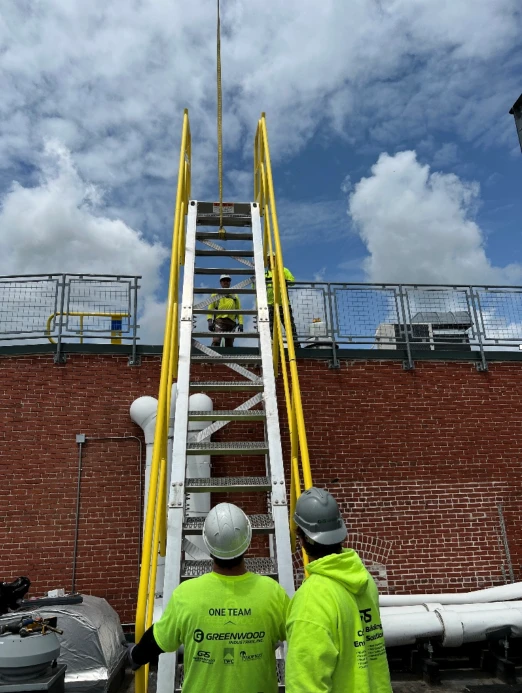 What are the OSHA Ladder Rule Requirements?
Under OSHA’s updated ladder safety standards, which reflect recent regulatory changes:
- Fixed ladders over 24 feet must be equipped with a ladder safety system or personal fall arrest system
- Ladder cages are no longer considered compliant fall protection for new ladders installed after November 19, 2018
- Existing ladders with cages must be upgraded by November 18, 2036
There is an important detail that often gets overlooked. If any portion of an existing ladder is replaced, that section must meet current code requirements.
This means compliance is not just tied to a future deadline. It can be triggered during routine repairs, renovations, or adjacent work such as roofing or façade projects.
How This Impacts Existing Buildings
Many facilities still rely on ladder systems installed years or decades ago. While these systems may appear functional, they may not meet current standards.
A common scenario involves a ladder with a cage that was compliant when installed. Over time, sections may need repair due to wear, corrosion, or changes to surrounding systems. Once those repairs begin, updated requirements can apply.
What starts as a maintenance item can quickly become a larger upgrade.
Without proper planning, this can lead to:
- Project delays due to code compliance issues
- Unexpected scope increases
- Safety risks if systems are not properly evaluated
Understanding when and how these requirements apply is critical to avoiding disruption.
Coordinating Compliance with Building Envelope Work
Ladder systems are rarely isolated from other building components. They are often tied directly to roof access, mechanical equipment, and façade maintenance.
For this reason, ladder compliance is best evaluated as part of a broader building envelope strategy.
At Greenwood Industries, this means looking at:
- How access systems integrate with roofing assemblies
- Whether planned repairs or replacements will trigger compliance updates
- How to coordinate fall protection systems with existing conditions
- The sequencing of work across trades to avoid conflicts or rework
This approach allows facility teams to address compliance proactively, rather than reacting to it mid-project.
When to Evaluate Your Ladder Systems
If you are responsible for building maintenance or capital planning, it may be time to take a closer look at your ladder systems if:
- Fixed ladders exceed 24 feet in height
- Existing systems rely on cages for fall protection
- Repairs or modifications are being planned
- Roofing, façade, or mechanical work is scheduled
- Access or safety concerns have been raised by staff or contractors
In many cases, these conditions indicate that a more detailed evaluation is needed to determine current compliance requirements.
Planning Ahead for Ladder Rule Compliance
OSHA’s ladder rule reflects a broader shift toward safety systems that are not only compliant, but effective in real-world conditions.
For facility teams, staying aligned with these changes requires forward planning. Addressing ladder systems as part of larger projects, rather than in isolation, can help reduce costs, improve safety, and avoid last-minute scope changes.
By understanding how regulatory updates apply to your building and coordinating them with ongoing work, you can maintain compliance while supporting long-term performance across the entire building envelope.
Need help navigating OSHA compliance updates? Our team can evaluate your facility and recommend the right path forward. Reach out today.