Practical Insights for Long-Term Building Performance
How Roof Maintenance Decisions Impact Long Term Performance and Cost
How a roof is maintained over time ultimately determines how it performs and how long it lasts. Whether a roof reaches or exceeds its projected service life often depends less on installation and more on the maintenance decisions made over time.
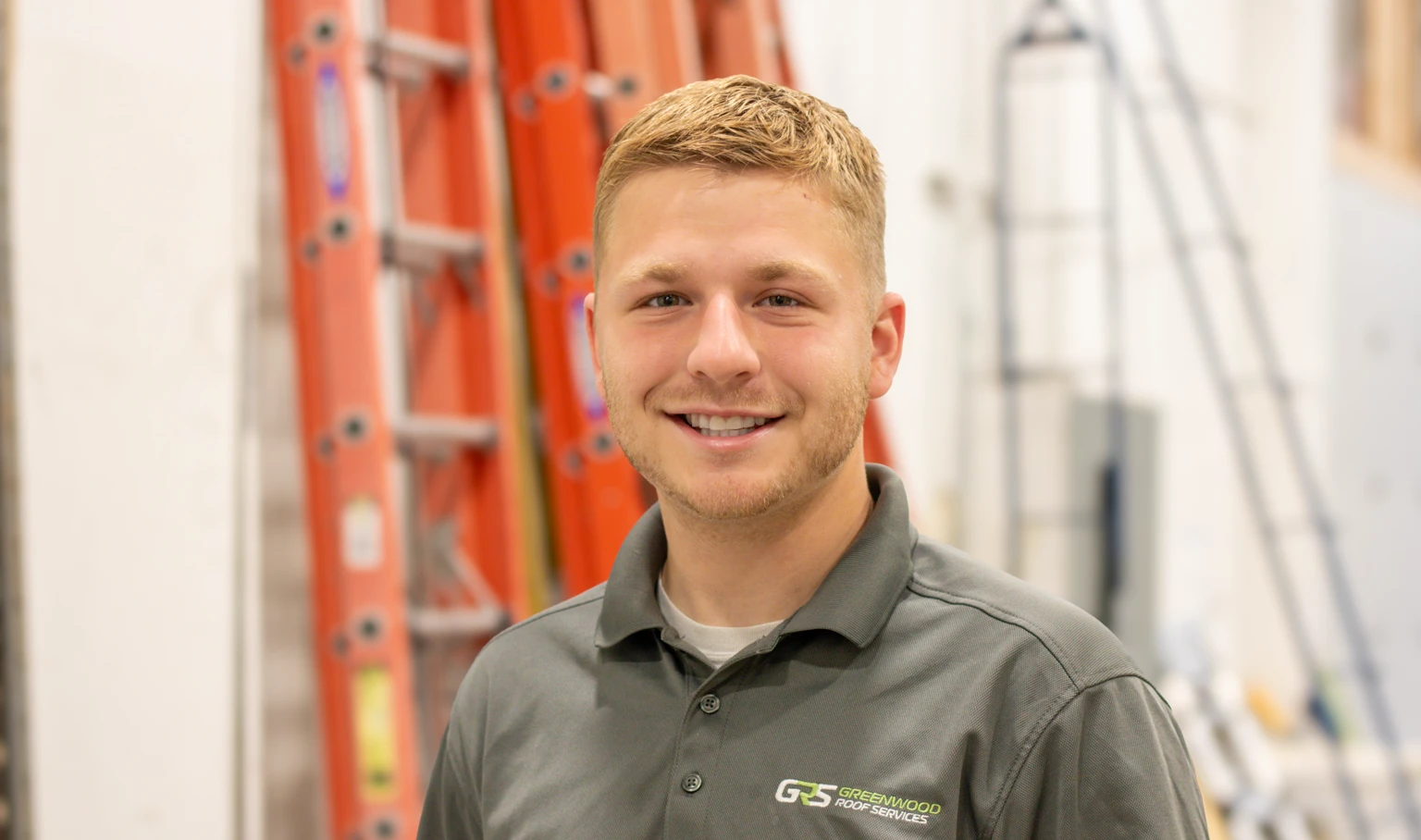
As Greenwood Industries’ Account Manager Ethan Mania explains, “Roof systems are a long-term capital asset designed to perform for decades, but only when informed by timely maintenance decisions.”
Based on experience across commercial facilities, roof systems rarely fail suddenly. Instead, they deteriorate progressively, with small issues expanding when maintenance is delayed or deferred.
“The difference between a roof reaching its projected lifetime or failing prematurely comes down to the maintenance you put into it,” Ethan says.
At Greenwood Industries, our Account Managers serve as building envelope advisors, helping clients understand risk, plan maintenance, and protect their facilities long term. Ethan works with facility managers and property owners throughout the Northeast, helping them evaluate roofing conditions and plan maintenance strategies. Here, he breaks down how maintenance decisions directly impact long-term performance, service life, and total cost of ownership.
The Maintenance Decision That Most Often Leads to Premature Failure of a Roof System
One of the most damaging maintenance decisions is delaying repairs to minor infiltration or flashing deficiencies. Small breaches at penetrations, seams, terminations, or wall transitions are often viewed as minor concerns, but they rarely remain isolated.
“The single most damaging decision we see is delaying minor infiltration or flashing repairs,” Ethan explains. “Small breaches rarely stay small without proper maintenance.”
Once moisture enters a roof assembly, damage begins to spread. Insulation loses thermal performance, decking can deteriorate, membranes break down more rapidly, and structural components may begin to corrode.
“Water intrusion is progressive,” he notes. “Once moisture enters the system, it compromises insulation, deteriorates the deck, accelerates membrane breakdown, and can corrode structural components.”
By the time an interior leak becomes visible, moisture has often already expanded well beyond the original entry point.
“When a leak becomes visible, the damage has already expanded significantly within the roof assembly,” Ethan adds.
What begins as a minor flashing repair can escalate into widespread system damage if corrective action is delayed.
Proactive Roof Maintenance vs Reactive Repairs
From a service perspective, proactive maintenance fundamentally changes how roof systems are managed. Reactive repairs typically address symptoms after damage has progressed, such as interior leaks, wet insulation, or membrane failures.
“Reactive repairs address symptoms after damage has already progressed,” Ethan says. “They’re more invasive, more expensive, and more disruptive to operations.”
A proactive maintenance approach focuses on:
- Identifying vulnerabilities before failure occurs
- Preserving manufacturer warranty compliance
- Extending service life beyond original projections
- Reducing emergency service calls and operational disruption
- Allowing predictable budgeting rather than unplanned capital expenses
“It shifts roof management from crisis response to asset protection,” Ethan explains.
From a lifecycle cost standpoint, structured preventative maintenance programs consistently cost a fraction of premature roof replacement.
“Extending a roof system even a few years can create significant deferred capital savings and improve return on the original investment,” Ethan adds.
Early Warning Signs Facility Managers Should Watch For
Facility managers should monitor both exterior and interior indicators of early roof system stress. Common warning signs include:
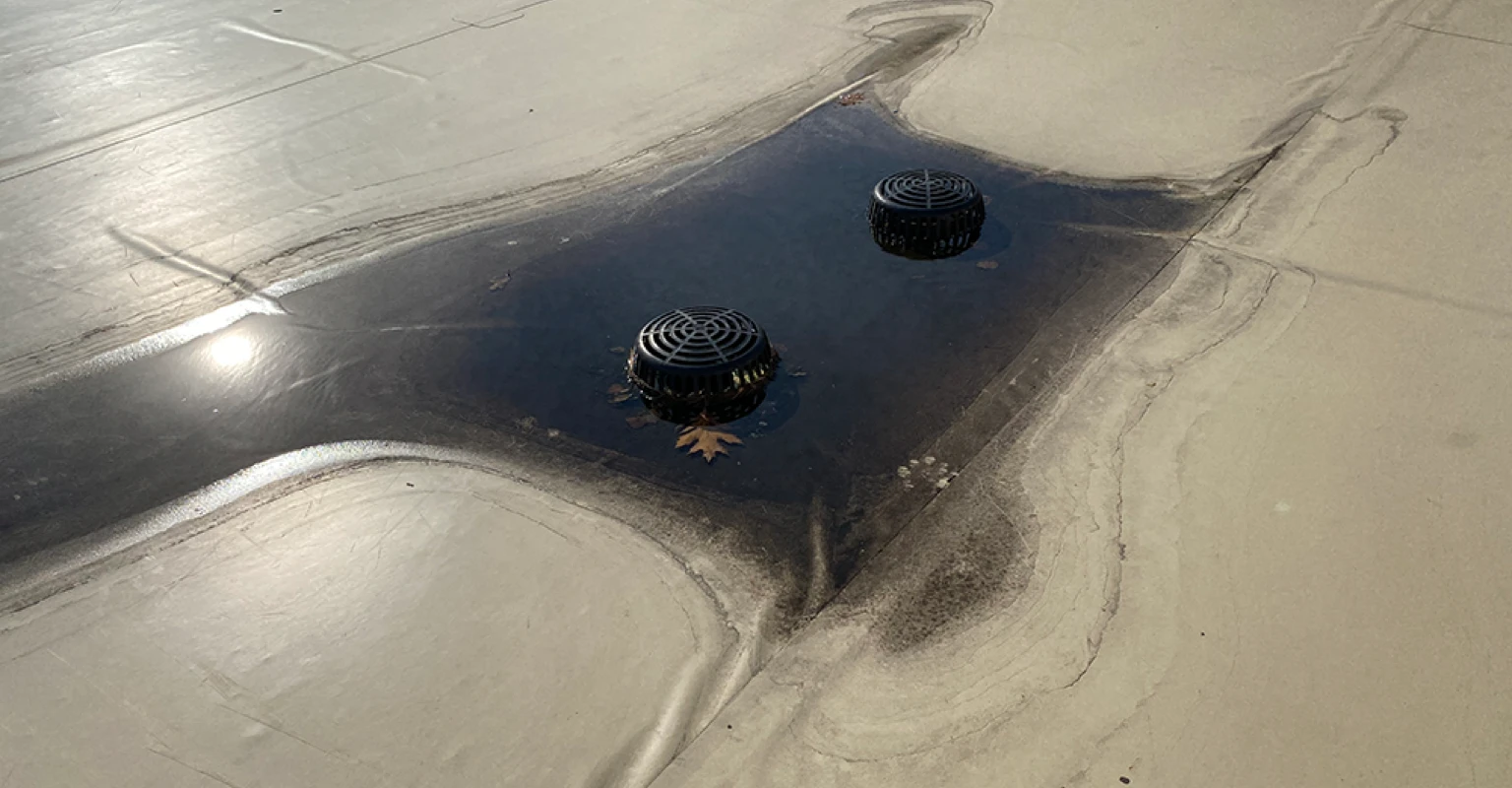
- Ponding water remaining more than 48 hours after rainfall
- Open seams, failed flashing, or deteriorated sealants
- Membrane blistering, shrinkage, or surface cracking
- Clogged or damaged drainage systems
- Rusting metal components or fasteners backing out
- Interior ceiling stains or recurring leaks in the same area
- Increasing frequency of minor service calls
“These indicators rarely resolve on their own,” Ethan emphasizes. “Routine inspections allow targeted, lower-cost corrective measures before insulation saturation, deck deterioration, or structural impact occurs.”
Roof Maintenance Determines the Outcome
Long-term roof performance is defined by how deterioration is managed over time.
“Maintenance decisions determine whether deterioration is slow and controlled or accelerated and costly,” Ethan reinforces.
Consistent inspections and timely corrective work allow roofs to perform as intended while protecting long term building value.
If you are evaluating your roof system or planning ahead for maintenance, connect with Greenwood Industries to speak with one of our account managers and discuss a proactive approach to long-term performance.