The post GREENWOOD INDUSTRIES ACQUIRES DIAMOND ROOFING, EXPANDING ITS FAMILY OF TRUSTED REGIONAL BRANDS IN NEW YORK appeared first on Greenwood Industries.
]]>Diamond Roofing will continue to operate under its current brand and leadership, with the added support of Greenwood’s operational resources, safety programs, and technical expertise. Integration into Greenwood’s operating platform will take place gradually, with a focus on continuity for customers, employees, and partners.
“Diamond Roofing has built an outstanding business and an exceptional reputation in Central New York,” said David Klein, CEO of Greenwood Industries. “We’re proud to welcome Don and his team to Greenwood and look forward to building on their success together.”
The acquisition also expands what Diamond can offer its customers. Beyond its core roofing expertise, Diamond will now be backed by Greenwood’s broader capabilities in waterproofing, masonry, specialty roofing, and service solutions spanning the full building envelope.
“Joining Greenwood positions Diamond for its next chapter while preserving the strengths that have defined our business for decades,” said Don DeStefano, owner of Diamond Roofing. “This partnership gives our customers access to deeper building envelope expertise and creates new opportunities for our team.”
Greenwood Industries builds market-leading businesses by investing in trusted companies, strengthening their capabilities, and creating long-term value for customers, employees, and partners. Through its family of brands, Greenwood delivers commercial roofing and building envelope expertise backed by its scale, service, and resources.
About Greenwood Industries
Greenwood Industries is a leading provider of custom building envelope solutions, with 15 locations throughout the Northeast. For more than 30 years, Greenwood has delivered commercial roofing, architectural metal fabrication, waterproofing, masonry, maintenance, and historic restoration services for complex exterior building systems.
Through its growing family of market-leading specialty contractors, including Silktown Roofing, TWC Phoenix Waterproofing and Masonry, Brunca Waterproofing, Gilbert & Becker Co., Inc., and Diamond Roofing, Greenwood continues to expand its technical expertise, regional reach, and ability to support customers across complementary exterior building services.
Greenwood is recognized by Roofing Contractor Magazine as a top 10 commercial roofing contractor in the United States and has earned numerous industry awards for craftsmanship and performance. For more information, visit www.greenwoodindustries.com.
About Diamond Roofing
Founded in 1947, Diamond Roofing has served customers across New York State for nearly eight decades. Built on a philosophy of putting customers first, the company has grown from its roofing roots into a respected regional provider of roofing, sheet metal fabrication, environmental asbestos abatement, and related specialty services. Its work can be seen on some of New York State’s most notable architecture, ranging from small re-roofing projects to historic, multi-million-dollar restorations.
The post GREENWOOD INDUSTRIES ACQUIRES DIAMOND ROOFING, EXPANDING ITS FAMILY OF TRUSTED REGIONAL BRANDS IN NEW YORK appeared first on Greenwood Industries.
]]>The post How Training, Craft, and Planning Impact Roof Performance: Workforce Behind the Work appeared first on Greenwood Industries.
]]>The role of workforce training, safety, and execution in roof system performance
Roof system performance is typically evaluated based on materials, design, and environmental exposure. However, field execution, workforce training and jobsite conditions also play a significant role in how systems perform over time.
Across the commercial roofing industry, there is a wide gap between what systems are designed to do and how they perform in the field. That gap is shaped by workforce experience, training, safety practices, and how well work is planned and executed.
The industry is also facing ongoing workforce challenges. According to the National Roofing Contractors Association, labor availability remains one of the most persistent concerns among contractors, with many firms reporting difficulty finding and retaining skilled workers. At the same time, data from the Bureau of Labor Statistics shows that roofing continues to be a physically demanding trade with higher-than-average injury risk, reinforcing the importance of training, experience, and safety programs.
At Greenwood Industries, roof performance is approached as a function of both system design and workforce capability.
Differentiators that impact roof performance
Many roofing systems today are technically sound on paper. The difference in long-term performance often comes down to execution.
Installation quality, attention to detail at transitions, and coordination across trades all influence whether a system performs as intended. Poorly executed seams, inconsistent flashing, or overlooked drainage conditions can compromise even the most advanced materials.
Greenwood Industries’ approach emphasizes disciplined field execution, with a focus on consistency across crews, projects, and regions. This reduces variability and helps ensure that systems perform the same way they were designed to perform.
The role of skilled union labor
Commercial roofing is a trade that requires precision, experience, and ongoing training. Skilled union labor plays a critical role in maintaining that standard.
Union apprenticeship programs combine classroom instruction with on-the-job training, often requiring several thousand hours of field experience before workers reach full journeyman status. This structured training helps standardize installation practices and reinforces safety and quality expectations across crews.
For building owners and facility teams, this translates into fewer installation errors, better detailing, and improved long-term system performance.
Year-round crews and real-world roof exposure
Roofing is not a seasonal activity. The same crews responsible for installation are often exposed to real-world conditions throughout the year.
In colder climates, that includes snow removal and emergency response work during winter months. These conditions provide direct insight into how roof systems behave under stress, including drainage performance, load conditions, and areas prone to failure.
This experience informs how systems are installed and maintained. Crews that understand how roofs perform during extreme conditions are better equipped to anticipate and prevent issues during installation.
Safety as a roof performance driver
Safety is often viewed as a compliance requirement. In practice, it is a key driver of quality and performance.
Roofing consistently ranks among the more hazardous construction trades, with elevated rates of falls and heat-related exposure. Structured safety programs help mitigate these risks while also improving jobsite organization and execution.
A strong safety program creates structure on the jobsite. It reinforces planning, communication, and accountability, all of which contribute to better execution. Crews that operate in a controlled, safety-focused environment are more consistent in how work is performed.
Greenwood Industries’ safety program goes beyond baseline requirements, emphasizing training, oversight, and continuous improvement. This reduces risk while also improving the quality and reliability of installation.
Crews are trained in OSHA standards, fall protection, and equipment use, with consistent protocols applied across projects. On active job sites, Greenwood Industries deploys hard-rail fall protection systems and dedicated safety oversight to create a more controlled work environment.
Safety planning also extends to rooftop audits and hazard identification, helping address risks related to access, skylights, and equipment.
This structured approach improves consistency in the field, supporting better execution and more reliable long-term roof performance.
A Greenwood Industries-focused approach to workforce strategy
While much of the industry focuses on labor availability, Greenwood Industries focuses on workforce development and retention.
This includes investing in training, maintaining experienced crews, and creating a culture centered on craftsmanship and accountability. The goal is not just to complete projects, but to deliver systems that perform over time.
By aligning workforce strategy with long-term performance goals, Greenwood Industries reduces variability and improves outcomes across its projects.
Supporting long-term roof performance
While roof performance is often assessed after installation, long-term outcomes are influenced by decisions made during planning, workforce training, and field execution.
Materials matter. Design matters. But the workforce behind the work is what brings those elements together.
For building owners and facility teams, understanding who is installing and maintaining the system is just as important as selecting the system itself.
Need help planning for long-term roof performance? Our team can evaluate your system and recommend the right path forward. Contact us today.
The post How Training, Craft, and Planning Impact Roof Performance: Workforce Behind the Work appeared first on Greenwood Industries.
]]>The post Typical Challenges Across New Construction, Service, and Restoration Work appeared first on Greenwood Industries.
]]> Challenges in building envelope work often vary depending on the type of project. However, across new construction, service, and restoration work, many of the underlying issues share a common theme: managing risk, coordination, and long-term performance.
As Account Manager Steve Minkler explains, “The challenges often differ in form but share a common theme: managing risk, coordination, and long-term performance.”
At Greenwood Industries, our account managers serve as building envelope advisors, helping clients guide new construction decisions, understand risk, plan maintenance, and protect their facilities long term. Here, Steve explains why success in each phase depends on understanding how early decisions impact future performance.
New Construction: Coordination and Schedule Pressure
In new construction, roofing and building envelope scopes are often pushed toward the final phases of a project, after much of the structure is already in place. As a result, these systems are expected to be completed within increasingly tight timeframes, with little room to absorb delays or adjustments.
“In the new construction sector, the biggest challenges tend to be schedule compression, scope clarity, and coordination between trades,” Steve explains.
This time pressure can create downstream effects, particularly when design details are still evolving or cost-driven decisions are introduced late in the process. What may seem like minor adjustments in the moment can have lasting implications for durability and performance.
“Often, incomplete details, value-engineering decisions, or rushed sequencing can compromise long-term performance if not identified and addressed early,” he adds.
To mitigate these risks, successful projects rely on alignment well before installation begins. Establishing clear expectations, reviewing how systems will be built in practice, and maintaining coordination across trades helps ensure consistency between design intent and field execution.
“At Greenwood Industries, we focus heavily on pre-planning, constructability reviews, and clear communication to ensure systems are installed as designed, not just as scheduled,” Steve notes.
Service and Maintenance: Identifying Root Causes
Service work presents a different set of conditions than new construction. By the time a problem becomes visible, it has often been developing beneath the surface for some time, influenced by wear, environmental exposure, and past decisions related to maintenance or installation.
“For service and maintenance, the challenge is that issues are rarely isolated,” Steve explains. “Leaks, moisture intrusion, and rooftop failures are often symptoms of broader system conditions.”
Facility teams are often managing active buildings where downtime, cost control, and immediate needs must all be considered at once. This can lead to short-term solutions that address the most visible issue without fully resolving what caused it.
“The key is proactive inspections, accurate diagnosis, and rapid response, not just temporary fixes,” he emphasizes.
A more effective approach prioritizes understanding the full condition of the system and using that insight to guide future decisions. This allows teams to move from reactive responses toward a more planned and strategic maintenance approach.
“Greenwood Industries’ service model is built around identifying root causes and helping clients plan proactively rather than being reactive only,” Steve adds.
Restoration and Repair: Managing Uncertainty
Restoration projects come with a higher degree of unpredictability compared to new construction or routine service work. Conditions uncovered during the process can shift the scope, requiring teams to adapt quickly while maintaining progress. At the same time, much of this work takes place in active environments where occupants, operations, and access limitations must all be considered.
“With restoration and repair work, uncertainty is the biggest obstacle,” Steve explains. “Hidden conditions, weather exposure, and occupied buildings can complicate even well-planned projects.”
Successfully navigating these variables depends on strong coordination in the field and the ability to adjust without compromising safety or quality. Crews must work efficiently within constraints while maintaining a high level of execution.
“The challenge is restoring performance without disrupting operations, and doing it right the first time,” he adds.
A Consistent Goal Across All Project Types
While the challenges differ, the objective remains the same across new construction, service, and restoration work: protecting the building, the people inside it, and the owner’s long-term investment.
“Across all three areas, success comes down to expertise, communication, and accountability,” Steve notes. “Our role is to protect the building, the people inside it, and the long-term investment.”
Achieving that outcome requires expertise, communication, and accountability at every stage of the project lifecycle.
If you are planning new construction, managing ongoing service needs, or preparing for restoration work, connect with our team to discuss your facility and next steps.
The post Typical Challenges Across New Construction, Service, and Restoration Work appeared first on Greenwood Industries.
]]>The post Greenwood Industries to Serve as Official Start-Line Sponsor of the Pan-Mass Challenge’s Inaugural Worcester Start appeared first on Greenwood Industries.
]]>WORCESTER, Mass., [Month, Day, 2026]. Greenwood Industries today announced that it will serve as the official Worcester hub site sponsor of the Pan-Mass Challenge, supporting the PMC’s mission to fund cancer research and patient care at Dana-Farber Cancer Institute.
The sponsorship carries added significance for Greenwood, which has called Worcester home for more than 30 years, as the city joins the PMC’s starting locations for the first time. Riders will set off from the College of the Holy Cross in Worcester on August 1, 2026, alongside thousands of cyclists traveling routes across Massachusetts in support of Dana-Farber.
The expanded role builds on Greenwood’s existing partnership with the PMC and reflects the company’s ongoing commitment to causes that strengthen the communities it serves.
“We are proud to stand with the Pan-Mass Challenge as it begins this new chapter in Worcester,” said Dave Klein, CEO of Greenwood Industries. “This partnership brings together an important cause and a city whose resilience, determination, and community spirit mirror the values that define the PMC.”
“Launching a Worcester start line is a powerful next chapter for the PMC and having Greenwood Industries as our Worcester hub site sponsor makes it even more special,” said Billy Starr, Founder and Chairman of the Pan-Mass Challenge. “Worcester has a rich cycling heritage and a strong sense of community, and we see that same spirit in our partners at Greenwood and in every rider and volunteer. Partnerships like this ensure that 100 percent of every rider-raised dollar goes directly to Dana-Farber to fund lifesaving research and care and make this moment even more meaningful because a personal friend has stepped up in such a significant way.”
The Pan-Mass Challenge is the largest single athletic fundraising event in the country, bringing together thousands of riders, volunteers, sponsors, and donors each year. As official start-line sponsor, Greenwood employees will be on the ground throughout the weekend, volunteering alongside the PMC community and helping send riders off on the morning of the event.
“This is a meaningful opportunity for Greenwood to give back, both to our hometown and to the broader effort to advance cancer research and care,” Klein added.
About Greenwood Industries
Greenwood Industries is a leading provider of building envelope solutions, with 15 locations across the Northeast. For more than 30 years, the company has delivered commercial roofing, architectural metal fabrication, waterproofing, masonry, and maintenance services for complex exterior building systems. Through its family of specialty contractors, including Silktown Roofing, TWC Phoenix Waterproofing and Masonry, Brunca Waterproofing, and Gilbert & Becker Co., Inc., Greenwood continues to expand its capabilities and regional reach. Recognized by Roofing Contractor magazine as one of the top 10 commercial roofing contractors in the United States, Greenwood has earned numerous industry awards for craftsmanship and performance. For more information, visit www.greenwoodindustries.com or follow Greenwood on LinkedIn, Instagram, Facebook, and X.
About the Pan-Mass Challenge
The Pan-Mass Challenge (PMC) is a bike-a-thon that today raises more money for charity than any other single athletic fundraising event in the world. Founded in 1980 by Billy Starr – who remains the event’s founder & chairman, an annual cyclist, and a fundraiser – the PMC has raised $1.125 billion for Dana-Farber Cancer Institute through the Jimmy Fund. As Dana-Farber’s single largest contributor, the organization generates 67 percent of the Jimmy Fund’s annual revenue. 100 percent of every-rider raised dollar goes directly to fueling cancer research and treatment at Dana-Farber. In addition to its two-day bike-a-thon across Massachusetts, the PMC is powered by further “spokes in the wheel,” with initiatives including the PMC Winter Cycle, an indoor spin event, PMC Unpaved, a gravel bike ride, and PMC Kids Rides, mini bike-a-thons for children ages 2 to 15. The PMC attracts riders and volunteers from 47 states and 12 countries and over 300,000 individual donors. Across events, the PMC has successfully melded support from committed cyclists, volunteers, corporate sponsors, and individual donors, all of whom are essential to the PMC’s goal and model: to attain maximum fundraising efficiency while increasing its annual gift. The PMC’s aspiration is to provide Dana-Farber’s doctors and researchers with the necessary resources to discover cures for all cancers. For more information, visit pmc.org.
Media Contacts
Ginny Pitcher, Greenwood Industries
[email protected]
508.612.3645
Jenna Lehan, Hollywood Agency
[email protected]
781.336.7554
The post Greenwood Industries to Serve as Official Start-Line Sponsor of the Pan-Mass Challenge’s Inaugural Worcester Start appeared first on Greenwood Industries.
]]>The post Remedy for Aging Infrastructure: Re-Roofs & Historic Preservation appeared first on Greenwood Industries.
]]>Re-roofing and historic preservation for building envelopes
Why aging buildings require a strategic approach
Nearly half of all U.S. commercial buildings were constructed before 1980, and many are now reaching a point where major systems require replacement or restoration.
As these systems age, roof assemblies, masonry façades, and waterproofing systems that have performed for decades begin to show signs of fatigue, deterioration, and water intrusion.
For facility teams, the challenge is not just identifying these issues. It is determining how to address them in a way that balances performance, cost, and, in many cases, historic integrity.
Re-roofing and restoration projects are no longer isolated scopes. They require a coordinated approach to the entire building envelope to ensure long-term performance.
What happens when building systems age
Over time, building materials are exposed to repeated freeze-thaw cycles, UV degradation, and moisture infiltration. These conditions gradually weaken roofing membranes, flashing details, sealants, and masonry joints.
What may begin as minor issues, such as small leaks or open joints, can escalate into more significant problems if left unaddressed. Moisture entering the building envelope can travel beyond the point of entry, leading to concealed damage within wall assemblies or structural components.
In historic buildings, these challenges are often compounded by older materials that were not designed to accommodate movement or modern performance demands.
The risk of treating symptoms instead of systems
One of the most common issues in aging buildings is repeated repairs that address visible symptoms but not the underlying cause.
A roof leak may be patched, but if flashing transitions or adjacent masonry conditions are contributing to the problem, the issue will return. Similarly, repointing masonry without addressing water infiltration from above can accelerate deterioration.
Without a system-level evaluation, these repairs become cyclical, increasing costs over time without improving long-term performance.
Re-roofing as an opportunity to improve performance
Re-roofing projects provide an opportunity to do more than replace an aging system. They allow facility teams to evaluate and upgrade critical details that impact the entire building envelope.
This includes:
• Replacing or upgrading flashing and edge conditions
• Addressing drainage and slope deficiencies
• Coordinating roof-to-wall transitions with masonry systems
• Improving insulation and overall system performance
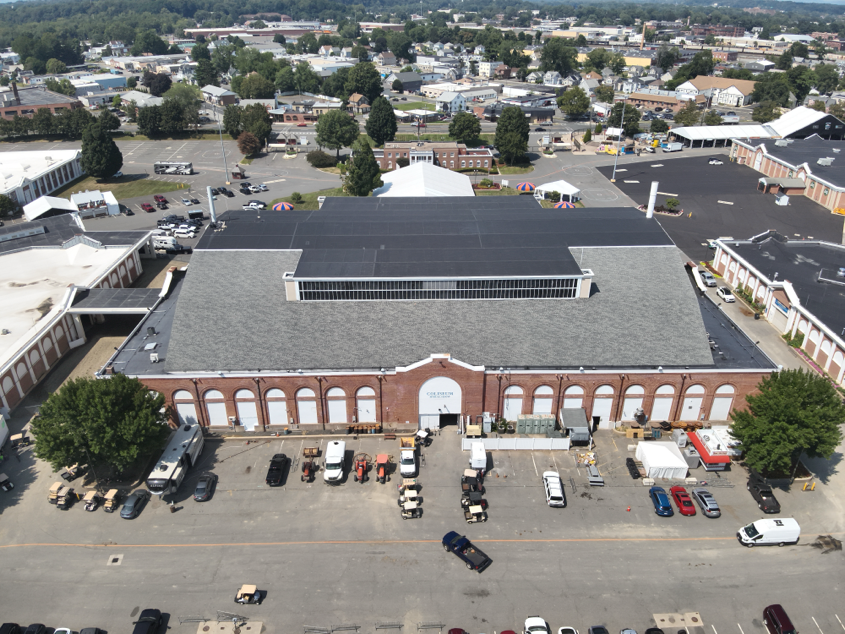
On projects like the Big E Coliseum, in Springfield, MA, originally constructed in 1916, re-roofing work required balancing modern performance needs with the building’s existing structure, including upgrading the EPDM system while preserving key architectural elements.
Similarly, work at New Britain Museum of American Art in New Britain, CT and Harris Public Library in Woonsocket, RI, reflect how re-roofing projects often serve as a critical intervention point for extending the life of aging institutional buildings.
Preserving historic character while upgrading performance
For historic and institutional buildings, preservation adds another layer of complexity. Maintaining the architectural character of a structure must be balanced with modern performance requirements.
Projects like Marble House in Newport, RI required architectural metal work, re-roofing, and restoration that respected the building’s historic appearance while upgrading performance.
At Fairhaven High School in Fairhaven, MA Greenwood Industries and TWC Phoenix collaborated on a large-scale restoration that included slate roofing, copper systems, waterproofing, and masonry repairs.
Work on the Cathedral of Saints Peter and Paul in Providence, RI further demonstrates the level of coordination required on historic structures, where roofing, masonry restoration, and waterproofing must all align to protect complex architectural features.
These projects highlight a key reality: historic restoration is not just about preserving appearance. It requires integrating modern materials and systems in a way that supports long-term durability without compromising the building’s character.
What to evaluate before starting a project
If your building is showing signs of aging, consider the following:
• Are leaks or water-related issues recurring in the same areas?
• Are roofing systems approaching or exceeding their expected lifespan?
• Is masonry showing signs of cracking, open joints, or deterioration?
• Are repairs addressing the root cause, or only the visible symptoms?
• Have roof, masonry, and waterproofing systems been evaluated together?
These conditions may indicate the need for a more comprehensive approach rather than isolated repairs.
Planning for long-term building performance
Addressing aging infrastructure requires more than reactive maintenance. It requires planning, coordination, and an understanding of how systems interact across the building envelope.
Greenwood Industries approaches these projects with integrated teams of roofers, masons, and metal fabricators working together to restore historic structures while meeting modern performance demands.
By evaluating roofing, masonry, and waterproofing together, facility teams can prioritize improvements, align scopes of work, and reduce long-term costs associated with repeated repairs.
A well-planned re-roofing and restoration project not only extends the life of the building, but also improves performance and protects structural components.
Spring is a critical window for evaluating aging buildings after winter conditions have taken their toll. Freeze-thaw cycles, snow load, and prolonged moisture exposure often reveal vulnerabilities across roofing, masonry, and waterproofing systems.
April is the time to assess these conditions, plan ahead, and prioritize projects before minor issues develop into larger repairs during the active construction season.
If your facility is showing signs of aging, now is the time to take a closer look.
Preserving aging buildings through strategic restoration
Across the Northeast, aging buildings are not going away, the way they are maintained is evolving.
Re-roofing and historic restoration are no longer just repair strategies. They are opportunities to improve performance, extend service life, and preserve the structures that define our campuses and communities.
With the right approach, these projects can move beyond short-term fixes and deliver lasting value for both the building and the people who rely on it.
Need help planning a re-roofing or restoration project? Our team can evaluate your building and recommend the right path forward. Contact us today.
The post Remedy for Aging Infrastructure: Re-Roofs & Historic Preservation appeared first on Greenwood Industries.
]]>The post 3 Common Issues That Lead to Emergency Roof Service Calls appeared first on Greenwood Industries.
]]>Across commercial facilities, emergency roof service calls are rarely isolated events. They typically stem from recurring and preventable conditions. According to Account Manager Mark Malcarne, these issues are not one-offs, but consistent patterns seen across portfolios.
At Greenwood Industries, our Account Managers serve as building envelope advisors, helping clients understand risk, plan maintenance, and protect their facilities long term. Mark works with facility managers and property owners throughout the Northeast, helping them evaluate roofing conditions, plan maintenance strategies, and prevent costly emergency repairs. Here, he breaks down the three most common issues that lead to emergency service calls and how they can be prevented.
1. Missed or Deferred Inspections
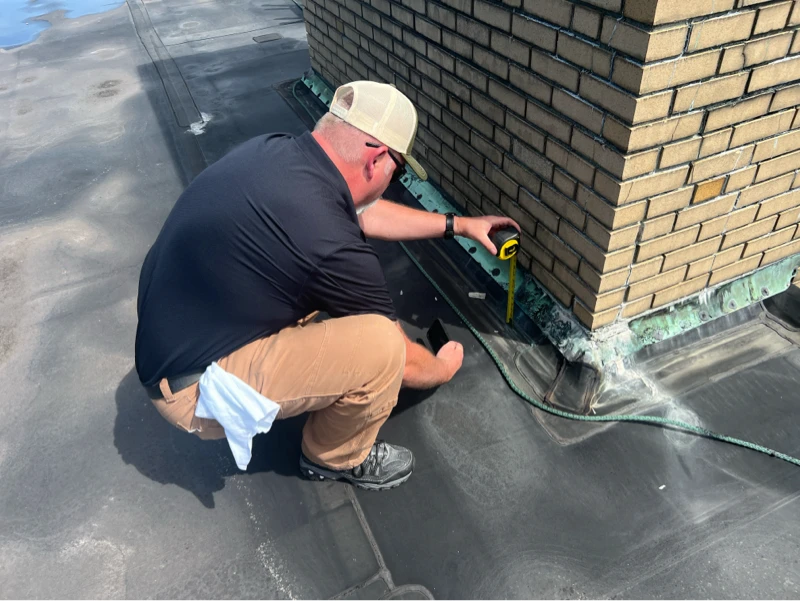
The most common mistake is not having regular roof inspections. Many building owners assume that because a roof has a warranty, there is nothing to worry about. That false sense of security often leads to issues being overlooked until they become emergencies.
“The first thing I hear is, ‘I have a warranty, so I don’t need to worry about it.’ But most warranties require regular inspections,” Mark explains. “If you don’t have that documentation, you can void the warranty entirely.”
Small conditions like open seams, membrane blisters, deteriorated flashings, or minor punctures are usually visible long before water enters a building. When a problem appears minor, it rarely stays that way. Water spreads, damage compounds, and repair costs escalate quietly but quickly.
Typical roof inspections cost between $1,000 and $1,500, while emergency repairs often start around $3,500 and can go significantly higher depending on timing, location, and severity.
“There’s a big difference between spending $1,000 to $1,500 on an inspection and catching issues early versus getting a call at night or on a weekend and starting at $3,500,” he notes. “At that point, you’re already behind.”
Emergency work frequently occurs nights or weekends, when service rates are typically 25 to 50 percent higher than scheduled repairs.
Staying on top of annual inspections and addressing repairs as they arise helps keep roofs performing as intended and can extend service life by as much as five years.
To support proactive planning, Greenwood offers Greenwood Performance Advantage (GPA) Programs, including GPA 2.0, 3.0, and 4.0. These tiered programs allow facility managers to choose the level of service that best fits their needs, from comprehensive inspections and reporting to preventative maintenance, debris removal, perimeter checks, minor repairs, and priority emergency response. Each program is designed to identify and address issues early, before they turn into emergency service calls.
2. Perimeter and Attachment Failures
High winds and severe weather often trigger emergency calls, but the root cause is usually improper attachment. Roof perimeters, edges, and corners experience the highest stress during storms. If membranes or insulation are not properly fastened or adhered, wind can lift materials and create sudden openings.
“A weather event might bring the call in, but it’s usually exposing something that wasn’t installed correctly,” Mark says. “If the membrane or insulation isn’t properly fastened, that’s when you see it lift and fail.”
These vulnerabilities are typically identified during inspections and corrected ahead of storm season, when repairs are safer, less disruptive, and more cost effective.
3. Damage from Rooftop Activity
While rooftop penetrations do occasionally cause issues, most emergency service calls are not the result of a single event. More often, damage comes from routine rooftop activity that goes unnoticed.
“It’s not usually one big event,” Mark notes. “Most of the time it’s something that was overlooked or never seen.”
Snow removal is a frequent contributor. Shovels and snow equipment can cut or slice roofing membranes, especially when snow and ice conceal surface conditions.
“Very often they make cuts and slices shoveling the roof,” he adds.
HVAC work and other service trades can also unintentionally damage roofing systems, whether through dropped tools, improper staging, or general wear from repeated access.
Seasonal inspections play an important role here. A fall inspection helps prepare roofs for winter and storm conditions, while a spring inspection identifies damage from snow removal and winter exposure before it develops into active leaks.
The Cost of Waiting
Emergency roof repairs often happen at the worst possible times and in sensitive areas such as patient spaces or fully occupied facilities. These situations increase complexity, limit repair options, and drive costs higher.
In contrast, planned inspections and preventative maintenance help control costs, reduce risk, and minimize operational disruption.
In fact, the majority of emergency calls could have been avoided altogether.
“I’d say 75% of the time, these are issues that could have been caught earlier,” Mark says. “If they had been inspected or taken care of, the chances of needing emergency repairs drop significantly.”
Bottom Line
Most emergency roof service calls stem from visible, preventable conditions. Regular inspections and proactive maintenance remain the most effective way to reduce emergency repairs and protect building performance year-round.
If you are seeing any of these conditions or want to get ahead of them, connect with our team.
The post 3 Common Issues That Lead to Emergency Roof Service Calls appeared first on Greenwood Industries.
]]>The post Practical Insights for Long-Term Building Performance appeared first on Greenwood Industries.
]]>
How Roof Maintenance Decisions Impact Long Term Performance and Cost
How a roof is maintained over time ultimately determines how it performs and how long it lasts. Whether a roof reaches or exceeds its projected service life often depends less on installation and more on the maintenance decisions made over time.
As Greenwood Industries’ Account Manager Ethan Mania explains, “Roof systems are a long-term capital asset designed to perform for decades, but only when informed by timely maintenance decisions.”
Based on experience across commercial facilities, roof systems rarely fail suddenly. Instead, they deteriorate progressively, with small issues expanding when maintenance is delayed or deferred.
“The difference between a roof reaching its projected lifetime or failing prematurely comes down to the maintenance you put into it,” Ethan says.
At Greenwood Industries, our Account Managers serve as building envelope advisors, helping clients understand risk, plan maintenance, and protect their facilities long term. Ethan works with facility managers and property owners throughout the Northeast, helping them evaluate roofing conditions and plan maintenance strategies. Here, he breaks down how maintenance decisions directly impact long-term performance, service life, and total cost of ownership.
The Maintenance Decision That Most Often Leads to Premature Failure of a Roof System
One of the most damaging maintenance decisions is delaying repairs to minor infiltration or flashing deficiencies. Small breaches at penetrations, seams, terminations, or wall transitions are often viewed as minor concerns, but they rarely remain isolated.
“The single most damaging decision we see is delaying minor infiltration or flashing repairs,” Ethan explains. “Small breaches rarely stay small without proper maintenance.”
Once moisture enters a roof assembly, damage begins to spread. Insulation loses thermal performance, decking can deteriorate, membranes break down more rapidly, and structural components may begin to corrode.
“Water intrusion is progressive,” he notes. “Once moisture enters the system, it compromises insulation, deteriorates the deck, accelerates membrane breakdown, and can corrode structural components.”
By the time an interior leak becomes visible, moisture has often already expanded well beyond the original entry point.
“When a leak becomes visible, the damage has already expanded significantly within the roof assembly,” Ethan adds.
What begins as a minor flashing repair can escalate into widespread system damage if corrective action is delayed.
Proactive Roof Maintenance vs Reactive Repairs
From a service perspective, proactive maintenance fundamentally changes how roof systems are managed. Reactive repairs typically address symptoms after damage has progressed, such as interior leaks, wet insulation, or membrane failures.
“Reactive repairs address symptoms after damage has already progressed,” Ethan says. “They’re more invasive, more expensive, and more disruptive to operations.”
A proactive maintenance approach focuses on:
- Identifying vulnerabilities before failure occurs
- Preserving manufacturer warranty compliance
- Extending service life beyond original projections
- Reducing emergency service calls and operational disruption
- Allowing predictable budgeting rather than unplanned capital expenses
“It shifts roof management from crisis response to asset protection,” Ethan explains.
From a lifecycle cost standpoint, structured preventative maintenance programs consistently cost a fraction of premature roof replacement.
“Extending a roof system even a few years can create significant deferred capital savings and improve return on the original investment,” Ethan adds.
Early Warning Signs Facility Managers Should Watch For
Facility managers should monitor both exterior and interior indicators of early roof system stress. Common warning signs include:
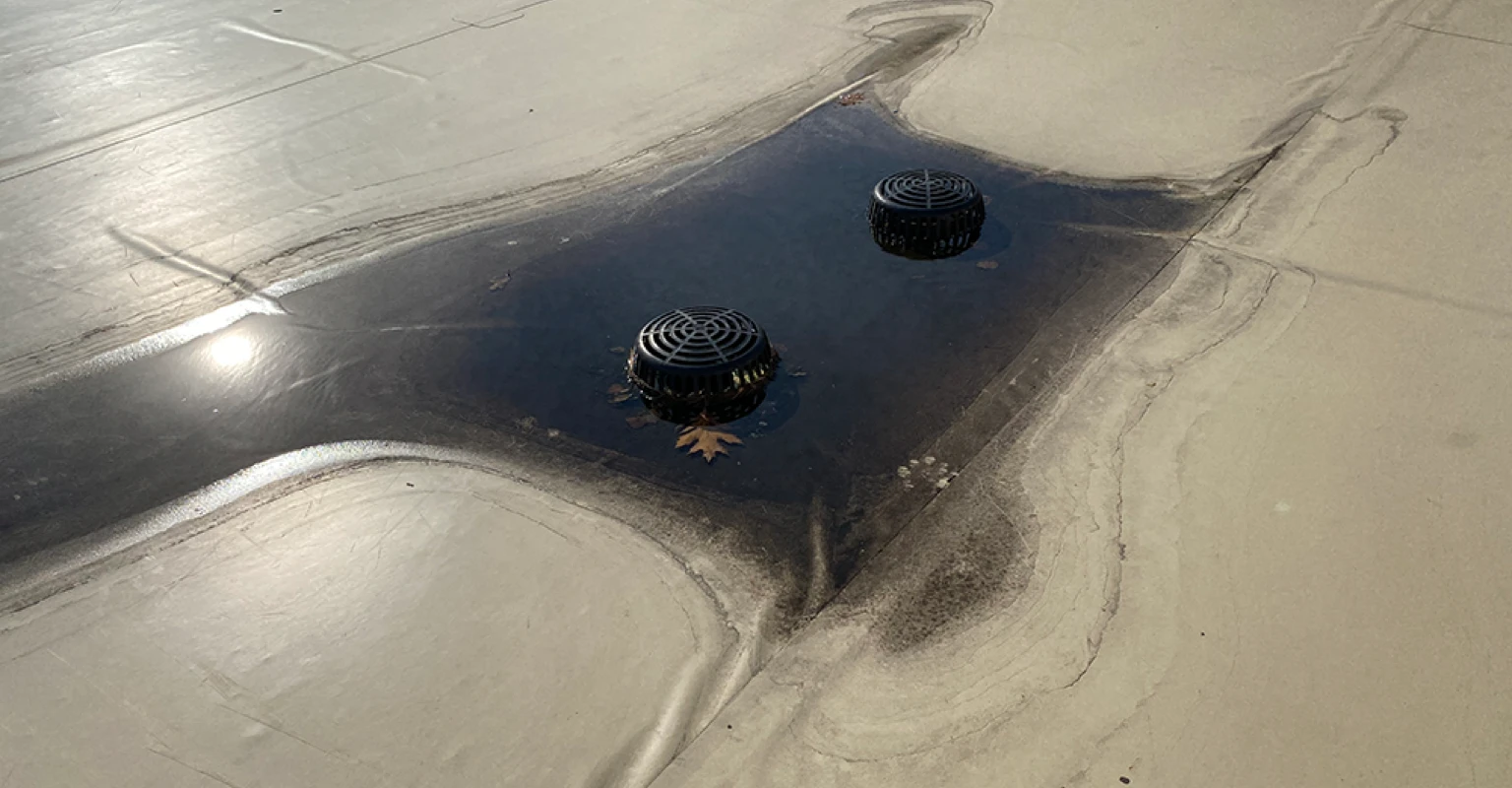
- Ponding water remaining more than 48 hours after rainfall
- Open seams, failed flashing, or deteriorated sealants
- Membrane blistering, shrinkage, or surface cracking
- Clogged or damaged drainage systems
- Rusting metal components or fasteners backing out
- Interior ceiling stains or recurring leaks in the same area
- Increasing frequency of minor service calls
“These indicators rarely resolve on their own,” Ethan emphasizes. “Routine inspections allow targeted, lower-cost corrective measures before insulation saturation, deck deterioration, or structural impact occurs.”
Roof Maintenance Determines the Outcome
Long-term roof performance is defined by how deterioration is managed over time.
“Maintenance decisions determine whether deterioration is slow and controlled or accelerated and costly,” Ethan reinforces.
Consistent inspections and timely corrective work allow roofs to perform as intended while protecting long term building value.
If you are evaluating your roof system or planning ahead for maintenance, connect with Greenwood Industries to speak with one of our account managers and discuss a proactive approach to long-term performance.
The post Practical Insights for Long-Term Building Performance appeared first on Greenwood Industries.
]]>The post Designing for climate resilience: preparing roof systems for heat, storms and extremes appeared first on Greenwood Industries.
]]>
Why resilient roofing is becoming a design requirement
Extreme weather is no longer an occasional stressor for buildings in the Northeast. It is a consistent condition that directly impacts roof performance.
According to the National Oceanic and Atmospheric Administration, the region has experienced a more than 70% increase in the amount of precipitation falling during the heaviest events since the mid-20th century, the largest increase of any region in the United States.
In Boston, annual precipitation has increased by approximately 6 to 8 inches over the past century, with a greater share coming from high-intensity storms. New York City has also seen a rise in extreme rainfall events, contributing to more frequent drainage overload and localized flooding.
At the same time, data from the Intergovernmental Panel on Climate Change shows that heat waves are occurring more frequently and lasting longer, increasing thermal stress on roofing materials and accelerating system wear.
These conditions directly affect how roof systems perform. In many cases, assemblies are exposed to more water, more heat, and more stress than they were originally designed to manage.
For commercial buildings, the roof is the first line of defense. Roof systems are now expected to manage more water, more heat, and more frequent storm events than most were originally designed for.
How climate stress impacts roof systems
Roof systems are exposed to a combination of stressors that are becoming more pronounced:
- Heat accelerates membrane aging, expansion, and material fatigue
- Heavy rainfall increases the risk of ponding and water intrusion
- Wind and storm events place additional stress on attachments, edges, and flashing
- Freeze-thaw cycles continue to impact assemblies in colder climates
These conditions rarely act independently. In many cases, they compound, placing additional strain on materials and detailing.
Without proper design and maintenance, even well-installed systems can begin to break down under repeated exposure.
Selecting the right roof system for performance & extreme weather
Different roof systems respond differently to environmental stress. Selecting the right system plays a key role in long-term resilience.
Based on systems used across the industry and outlined by Greenwood Industries:
- EPDM roofing systems
Known for flexibility and durability, EPDM performs well under temperature fluctuations and UV exposure, making it a strong option for long-term performance in variable climates. - TPO and PVC systems
These reflective membranes help reduce heat absorption, improving energy efficiency and reducing thermal stress on the building. They are often used where heat mitigation is a priority. - Built-up roofing (BUR) and modified bitumen
Multi-layer systems provide redundancy and durability, particularly in high-traffic or high-exposure environments. - Metal roofing systems
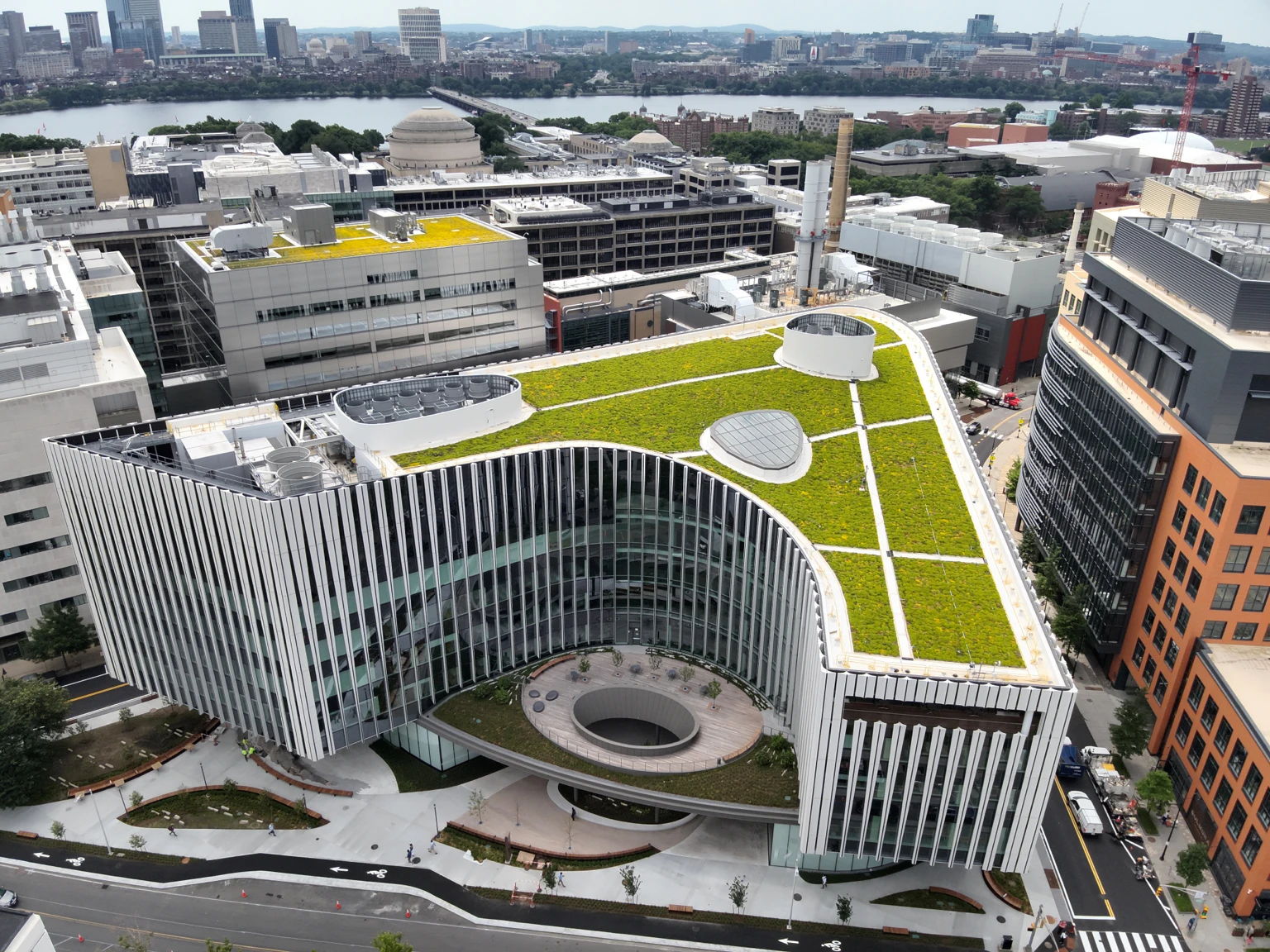
Highly durable and resistant to weather exposure, metal systems perform well in high-wind conditions and can be designed for long service life with proper detailing. - Vegetative (green) roof systems
Layered assemblies that incorporate waterproofing, drainage, and vegetation, green roofs help manage stormwater and reduce roof surface temperatures, supporting both system protection and environmental performance.
- Solar (photovoltaic) roof systems
Solar systems integrate energy generation with roofing assemblies, requiring coordinated design to maintain waterproofing integrity while potentially reducing surface temperatures through panel shading.
Each roofing system has advantages, but performance ultimately depends on how it is designed, installed, and maintained as part of the full building envelope.
The importance of detailing and system integration
Resilience is not determined by membrane selection alone. Failures often occur at transitions and details:
- Roof-to-wall intersections
- Penetrations and mechanical curbs
- Drainage and slope conditions
- Edge metal and attachment points
As weather becomes more extreme, these areas are subjected to greater stress. Proper detailing and coordination across trades are critical to ensuring continuity and performance.
Roof maintenance as a resilience strategy
Even the most robust roof systems require ongoing maintenance to perform as intended.
As conditions become more demanding, the role of maintenance becomes more important. Small issues, such as minor membrane damage, clogged drainage, or failing sealants, can escalate quickly under extreme weather conditions.
Through Greenwood Performance Advantage (GPA) Packages, facility teams can take a proactive approach to:
- Routine inspections
- Preventative maintenance
- Early identification of vulnerabilities
- Prioritized repair planning
This approach helps extend system life, reduce emergency repairs, and improve overall performance in changing conditions.
Planning ahead for seasonal exposure
Late spring and early summer are key windows for evaluating roof performance.
Winter conditions may have introduced damage, while upcoming summer heat and storm activity will place additional demands on the system. Addressing issues now allows facility teams to:
- Prepare for peak weather conditions
- Avoid mid-season failures
- Coordinate repairs before schedules tighten
Closing thoughts
As summer approaches, roof systems will face increased heat, UV exposure, and the potential for severe storm activity.
Designing for climate resilience is not about predicting specific events. It is about preparing for a wider range of conditions than buildings have historically experienced.
By selecting appropriate roof systems, focusing on critical details, and prioritizing maintenance, facility teams can improve performance, extend service life, and reduce long-term risk.
If your roof system has not been evaluated recently, now is the time to assess how it will perform under the conditions ahead.
For support in planning a new project or establishing a proactive maintenance program, contact the Greenwood Industries team to discuss your building’s needs.
The post Designing for climate resilience: preparing roof systems for heat, storms and extremes appeared first on Greenwood Industries.
]]>The post Greenwood Corporate Safety Director Appointed to ACCSH appeared first on Greenwood Industries.
]]>
Greenwood’s Corporate Safety Director Rob Lilley has been appointed Committee Chair for the Department of Labor’s Advisory Committee on Construction Safety and Health (ACCSH). The nine-member committee advises the DoL and OSHA on standards that shape safety across the construction industry.
The post Greenwood Corporate Safety Director Appointed to ACCSH appeared first on Greenwood Industries.
]]>The post Staying Aligned with Building Code Regulations: What the OSHA Ladder Rule Means for Your Facility appeared first on Greenwood Industries.
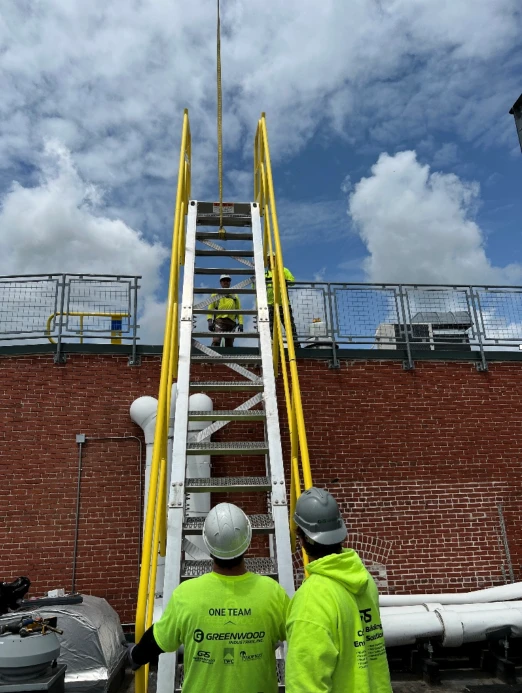
]]>Building code compliance is constantly evolving as safety, materials, and construction practices improve. A recent update affecting commercial and industrial facilities is OSHA’s walking-working surfaces rule, which changes how fixed ladders over 24 feet must be designed and maintained.
For years, ladder cages were considered standard protection. Now, that approach is being phased out in favor of ladder safety systems and personal fall arrest systems, which provide more reliable protection in the event of a fall.
For facility managers, this is more than a regulatory update. It directly impacts how buildings are accessed, maintained, and upgraded over time.
 What are the OSHA Ladder Rule Requirements?
Under OSHA’s updated ladder safety standards, which reflect recent regulatory changes:
- Fixed ladders over 24 feet must be equipped with a ladder safety system or personal fall arrest system
- Ladder cages are no longer considered compliant fall protection for new ladders installed after November 19, 2018
- Existing ladders with cages must be upgraded by November 18, 2036
There is an important detail that often gets overlooked. If any portion of an existing ladder is replaced, that section must meet current code requirements.
This means compliance is not just tied to a future deadline. It can be triggered during routine repairs, renovations, or adjacent work such as roofing or façade projects.
How This Impacts Existing Buildings
Many facilities still rely on ladder systems installed years or decades ago. While these systems may appear functional, they may not meet current standards.
A common scenario involves a ladder with a cage that was compliant when installed. Over time, sections may need repair due to wear, corrosion, or changes to surrounding systems. Once those repairs begin, updated requirements can apply.
What starts as a maintenance item can quickly become a larger upgrade.
Without proper planning, this can lead to:
- Project delays due to code compliance issues
- Unexpected scope increases
- Safety risks if systems are not properly evaluated
Understanding when and how these requirements apply is critical to avoiding disruption.
Coordinating Compliance with Building Envelope Work
Ladder systems are rarely isolated from other building components. They are often tied directly to roof access, mechanical equipment, and façade maintenance.
For this reason, ladder compliance is best evaluated as part of a broader building envelope strategy.
At Greenwood Industries, this means looking at:
- How access systems integrate with roofing assemblies
- Whether planned repairs or replacements will trigger compliance updates
- How to coordinate fall protection systems with existing conditions
- The sequencing of work across trades to avoid conflicts or rework
This approach allows facility teams to address compliance proactively, rather than reacting to it mid-project.
When to Evaluate Your Ladder Systems
If you are responsible for building maintenance or capital planning, it may be time to take a closer look at your ladder systems if:
- Fixed ladders exceed 24 feet in height
- Existing systems rely on cages for fall protection
- Repairs or modifications are being planned
- Roofing, façade, or mechanical work is scheduled
- Access or safety concerns have been raised by staff or contractors
In many cases, these conditions indicate that a more detailed evaluation is needed to determine current compliance requirements.
Planning Ahead for Ladder Rule Compliance
OSHA’s ladder rule reflects a broader shift toward safety systems that are not only compliant, but effective in real-world conditions.
For facility teams, staying aligned with these changes requires forward planning. Addressing ladder systems as part of larger projects, rather than in isolation, can help reduce costs, improve safety, and avoid last-minute scope changes.
By understanding how regulatory updates apply to your building and coordinating them with ongoing work, you can maintain compliance while supporting long-term performance across the entire building envelope.
Need help navigating OSHA compliance updates? Our team can evaluate your facility and recommend the right path forward. Reach out today.
The post Staying Aligned with Building Code Regulations: What the OSHA Ladder Rule Means for Your Facility appeared first on Greenwood Industries.
]]>