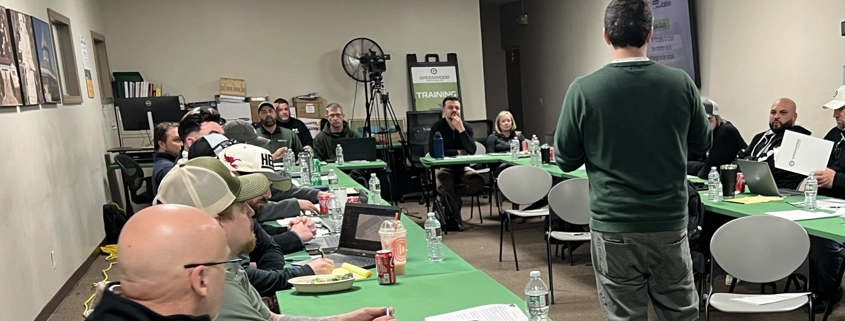
How Training, Craft, and Planning Impact Roof Performance: Workforce Behind the Work
The role of workforce training, safety, and execution in roof system performance
Roof system performance is typically evaluated based on materials, design, and environmental exposure. However, field execution, workforce training and jobsite conditions also play a significant role in how systems perform over time.
Across the commercial roofing industry, there is a wide gap between what systems are designed to do and how they perform in the field. That gap is shaped by workforce experience, training, safety practices, and how well work is planned and executed.
The industry is also facing ongoing workforce challenges. According to the National Roofing Contractors Association, labor availability remains one of the most persistent concerns among contractors, with many firms reporting difficulty finding and retaining skilled workers. At the same time, data from the Bureau of Labor Statistics shows that roofing continues to be a physically demanding trade with higher-than-average injury risk, reinforcing the importance of training, experience, and safety programs.
At Greenwood Industries, roof performance is approached as a function of both system design and workforce capability.
Differentiators that impact roof performance
Many roofing systems today are technically sound on paper. The difference in long-term performance often comes down to execution.
Installation quality, attention to detail at transitions, and coordination across trades all influence whether a system performs as intended. Poorly executed seams, inconsistent flashing, or overlooked drainage conditions can compromise even the most advanced materials.
Greenwood Industries’ approach emphasizes disciplined field execution, with a focus on consistency across crews, projects, and regions. This reduces variability and helps ensure that systems perform the same way they were designed to perform.
The role of skilled union labor
Commercial roofing is a trade that requires precision, experience, and ongoing training. Skilled union labor plays a critical role in maintaining that standard.
Union apprenticeship programs combine classroom instruction with on-the-job training, often requiring several thousand hours of field experience before workers reach full journeyman status. This structured training helps standardize installation practices and reinforces safety and quality expectations across crews.
For building owners and facility teams, this translates into fewer installation errors, better detailing, and improved long-term system performance.
Year-round crews and real-world roof exposure
Roofing is not a seasonal activity. The same crews responsible for installation are often exposed to real-world conditions throughout the year.
In colder climates, that includes snow removal and emergency response work during winter months. These conditions provide direct insight into how roof systems behave under stress, including drainage performance, load conditions, and areas prone to failure.
This experience informs how systems are installed and maintained. Crews that understand how roofs perform during extreme conditions are better equipped to anticipate and prevent issues during installation.
Safety as a roof performance driver
Safety is often viewed as a compliance requirement. In practice, it is a key driver of quality and performance.
Roofing consistently ranks among the more hazardous construction trades, with elevated rates of falls and heat-related exposure. Structured safety programs help mitigate these risks while also improving jobsite organization and execution.
A strong safety program creates structure on the jobsite. It reinforces planning, communication, and accountability, all of which contribute to better execution. Crews that operate in a controlled, safety-focused environment are more consistent in how work is performed.
Greenwood Industries’ safety program goes beyond baseline requirements, emphasizing training, oversight, and continuous improvement. This reduces risk while also improving the quality and reliability of installation.
Crews are trained in OSHA standards, fall protection, and equipment use, with consistent protocols applied across projects. On active job sites, Greenwood Industries deploys hard-rail fall protection systems and dedicated safety oversight to create a more controlled work environment.
Safety planning also extends to rooftop audits and hazard identification, helping address risks related to access, skylights, and equipment.
This structured approach improves consistency in the field, supporting better execution and more reliable long-term roof performance.
A Greenwood Industries-focused approach to workforce strategy
While much of the industry focuses on labor availability, Greenwood Industries focuses on workforce development and retention.
This includes investing in training, maintaining experienced crews, and creating a culture centered on craftsmanship and accountability. The goal is not just to complete projects, but to deliver systems that perform over time.
By aligning workforce strategy with long-term performance goals, Greenwood Industries reduces variability and improves outcomes across its projects.
Supporting long-term roof performance
While roof performance is often assessed after installation, long-term outcomes are influenced by decisions made during planning, workforce training, and field execution.
Materials matter. Design matters. But the workforce behind the work is what brings those elements together.
For building owners and facility teams, understanding who is installing and maintaining the system is just as important as selecting the system itself.
Need help planning for long-term roof performance? Our team can evaluate your system and recommend the right path forward. Contact us today.