4 Signs It’s Time for a Full Roof Inspection
When’s the best time for a full roof inspection? Before you need one.
Preventative maintenance remains the best practice for protecting a facility and extending the life of a roof system. But in reality, many facility managers are not starting with a new building or a roof in ideal condition. Most are managing systems that have aged over time, experienced repairs, or carry deferred maintenance, making it difficult to begin from a preventative maintenance baseline.
From experience, Greenwood Industries’ Account Managers know that full inspections are often scheduled only after an obvious problem appears. The goal is to recognize earlier warning signs, the “yellow flags,” that indicate a roof and building envelope would benefit from a comprehensive evaluation before conditions escalate into emergencies.
As Account Manager Nick Andreozzi explains, “From the customer’s point of view, the risk of waiting always seems small at first. But moisture spreads very easily, and what starts as a minor issue can turn into a much larger structural situation if it’s ignored.”
At Greenwood Industries, our Account Managers serve as building envelope advisors, helping clients understand risk, plan maintenance, and protect their facilities long term. Nick works with facility managers and property owners throughout the Northeast, helping them evaluate roofing conditions, plan maintenance strategies, and prevent costly emergency repairs. Here, Nick outlines several key conditions to look for that may indicate your facility would benefit from a full roof inspection.
When to Schedule a Commercial Roof Inspection
1. Visible Membrane and Attachment Issues
One of the first indicators that a roof needs more than a quick check is visible movement or separation within the roofing system. Delamination, loose membrane edges, or areas where the scrim becomes visible can signal improper attachment or aging materials.
“When you’re walking a commercial roof and you can actually see the scrim, or the EPDM membrane looks loose or lifting, that’s a red flag,” Nick says. “It usually means the membrane wasn’t properly adhered, seamed, or mechanically attached during installation.”
When membranes are not properly secured, wind and weather can worsen the condition quickly. What begins as a localized issue can expand into larger areas of failure, increasing the likelihood of leaks and system damage. A full inspection allows professionals to evaluate attachment integrity and identify areas where repairs can stabilize the system before further deterioration occurs.
2. Ponding Water and Drainage Concerns
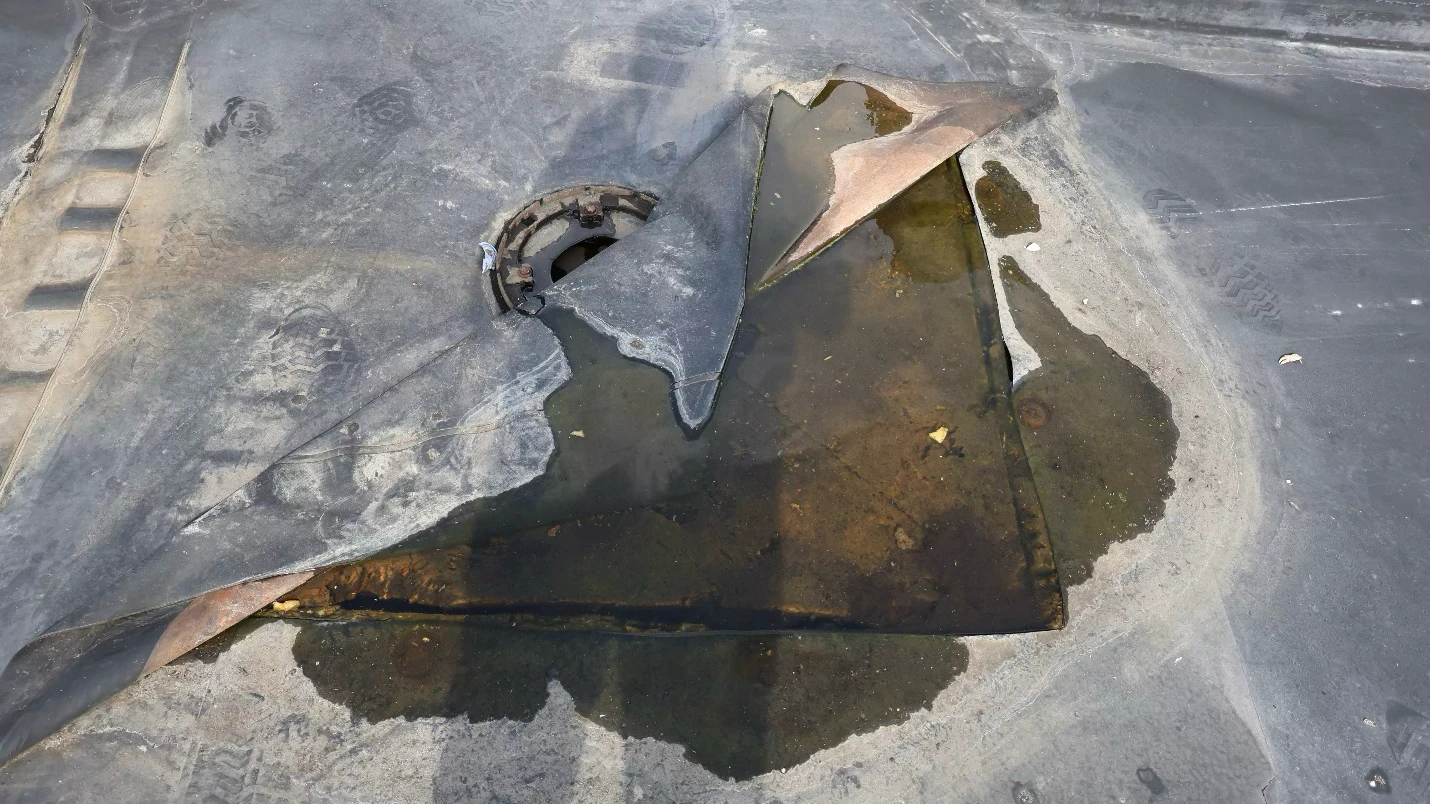
Standing water is one of the most consistent warning signs seen during inspections. Ponding water often indicates drainage problems, structural deflection, or saturated insulation beneath the membrane.
“From a contractor’s standpoint, ponding water is a big one,” Nick notes. “It usually points to a larger issue, whether that’s poor drainage design, saturated insulation, or a leak that hasn’t shown up inside the building yet.”
Over time, trapped moisture accelerates material breakdown and increases the risk of leaks. Addressing drainage and moisture concerns early helps prevent long-term damage and extends the overall life of the roof system.
3. Flashing Failures and Roof Penetrations
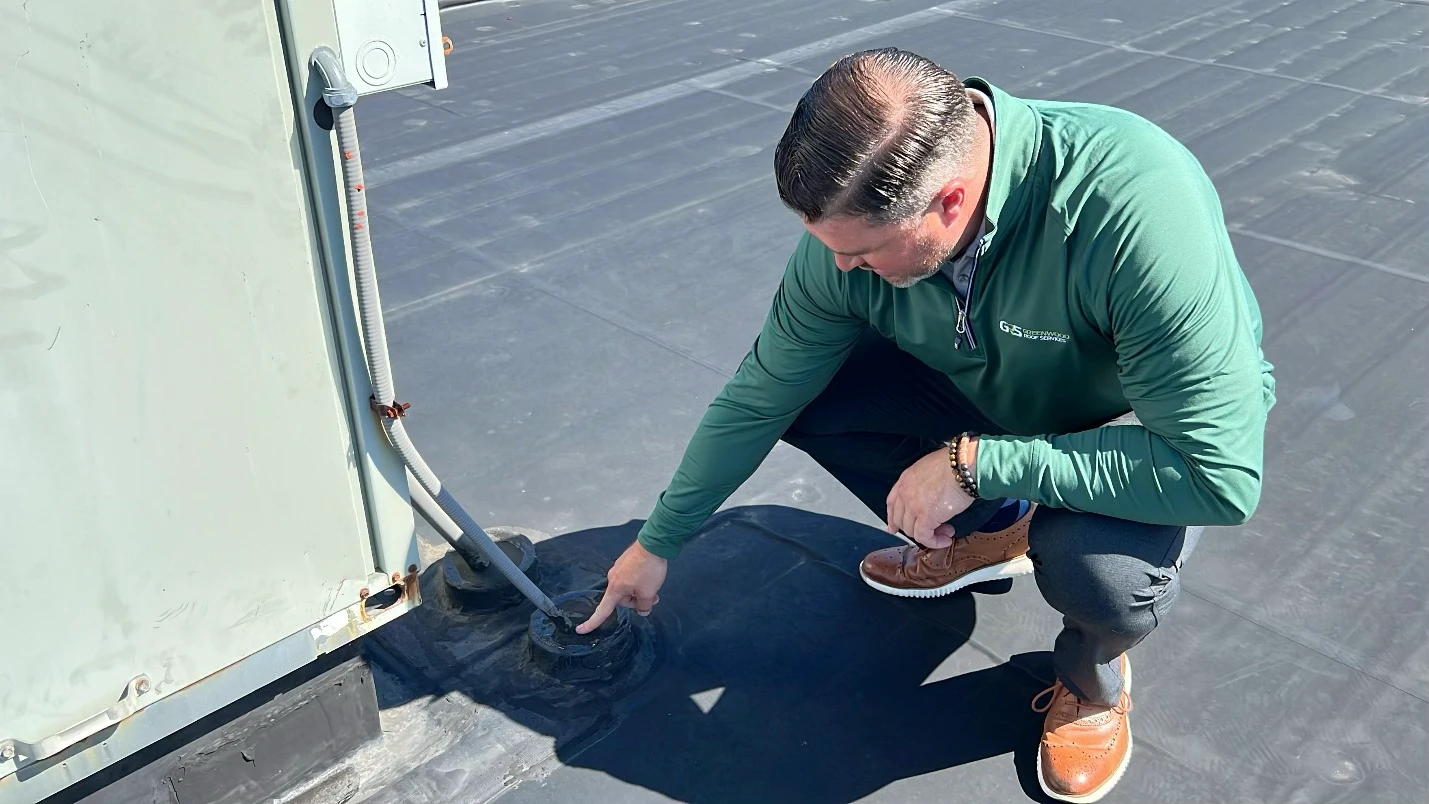
Flashing around pipes, pitch pockets, and rooftop penetrations is another common source of developing problems. Loose pitch pockets, deteriorated sealants, or small tears around penetrations allow water to enter the system gradually.
“If you look at a pipe penetration, it has to be wrapped and sealed correctly,” Nick explains. “A lot of times we see loose pitch pockets, deteriorated sealants, or small tears around penetrations that allow water to enter over time.”
These areas are especially vulnerable because they experience frequent movement and exposure. A comprehensive inspection evaluates both the exterior condition and potential pathways for water intrusion before leaks become active.
4. Interior Warning Signs Often Appear First
While inspections begin on the roof, complaints usually originate inside the building. Stained ceiling tiles, recurring drips, or areas that must be closed due to leaks are often the first signs building occupants notice.
“Active leaks inside the building are usually the number one thing customers notice first,” Nick says. “By the time you’re seeing stains, rotted ceiling tiles, or constant drips, water has already been getting in for a while.”
Moisture follows gravity and can travel far from the original source, making repairs more complex and disruptive if not addressed early. Coordinating exterior inspections with interior observations helps identify root causes rather than treating symptoms.
When Roof Age Alone Warrants an Inspection
Even without active leaks, roof age is an important factor. Many commercial roofing systems begin moving beyond warranty coverage around the 15 to 20 year mark. At that stage, materials may still appear functional while becoming more vulnerable to failure.
Scheduling inspections as roofs approach this age allows building owners to plan repairs proactively rather than reacting to emergencies that must be funded immediately.
The Risk of Waiting
From a building owner’s perspective, early issues often seem minor. In practice, moisture spreads quickly through insulation and structural components, turning small problems into larger repair scopes over time.
Waiting can lead to operational disruptions, air quality concerns, and in severe cases, the temporary loss of usable building space. Costs also increase as repair areas expand and emergency work becomes necessary.
Most of these situations begin with conditions that were visible and correctable earlier.
Practical Advice from Commercial Roof Experts
“A common mistake we see year after year is delaying known repairs or relying on temporary fixes,” Nick emphasized. “Roofing systems rarely improve on their own, and water intrusion tends to grow quietly before becoming visible.
Consistent inspections and timely repairs help extend the service life of a roof, often by several years, while reducing the likelihood of emergency service calls.”
If you are noticing any of these conditions or want to better understand the current state of your roof system, connect with our team at:
https://greenwoodindustries.com/contact/